Agricultural Interpreting Services in Fresno, CA: A Guide for Growers and Farm Employers
Quick Summary
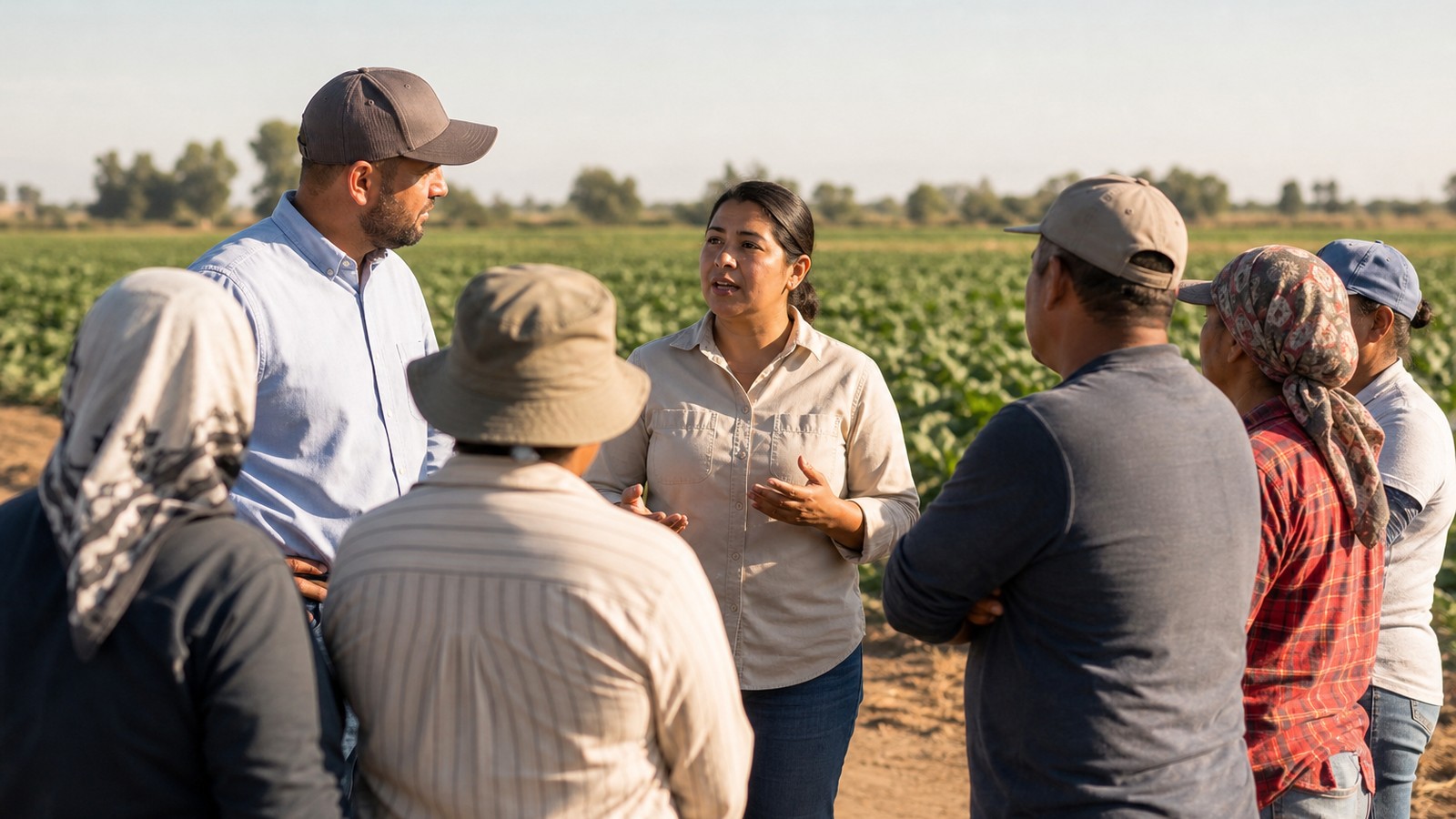
Fresno County anchors California's Central Valley agricultural economy, and most of that workforce speaks Spanish, Mixteco, Triqui, Punjabi, or Hmong as a first language. Professional agricultural interpreting services in Fresno close the communication gap between growers, farm labor contractors, and workers during safety trainings, HR onboarding, pesticide handling briefings, and workers' compensation claims. This guide covers when growers need certified interpreters, what to look for in an agency, and how accurate interpreting reduces injury risk and legal exposure on Central Valley farms.
Fresno County produces more agricultural revenue than almost any county in the nation, and that output depends on a workforce where English is frequently a second or third language. When a farm labor contractor cannot clearly explain heat-illness prevention rules, or a grower's HR office cannot walk an injured worker through a workers' comp claim, the result is not just a compliance gap — it is a safety and liability risk. Agricultural interpreting services in Fresno give growers, packing houses, and labor contractors a reliable way to communicate clearly with a multilingual workforce at every stage of employment.
Table of Contents
- Why Fresno's Farm Economy Needs Professional Interpreting
- Where Interpreting Matters Most on Fresno Farms
- Common Languages Across Fresno County Agriculture
- On-Site vs. Remote Interpreting for Farm Operations
- Workers' Compensation and Interpreting Obligations
- Choosing Agricultural Interpreting Services in Fresno
- Frequently Asked Questions
Why Fresno's Farm Economy Needs Professional Interpreting
Fresno County sits at the center of California's Central Valley, producing grapes, almonds, stone fruit, tomatoes, and dozens of other crops that move through packing houses and cold storage facilities across the region. That output relies on thousands of seasonal and year-round workers, many of whom are more comfortable in a language other than English.
Cal/OSHA's heat illness prevention standard, pesticide safety training requirements, and general farm labor law all require that instructions be delivered in a language and vocabulary workers understand. A translated handout is not the same as a live, two-way conversation where a worker can ask a follow-up question and get an accurate answer immediately. That is the gap professional interpreting closes.
Where Interpreting Matters Most on Fresno Farms
Growers and labor contractors typically need interpreting support in five recurring situations:
- New-hire orientation and safety training — heat illness prevention, equipment operation, and general farm safety rules must be understood, not just heard.
- Pesticide and chemical handling briefings — Worker Protection Standard training requires clear communication about re-entry intervals and protective equipment.
- Supervisor-to-crew daily briefings — task assignments, equipment changes, and weather-related schedule shifts.
- HR and onboarding paperwork — wage statements, benefits explanations, and employment policies.
- Workers' compensation claims — injury reporting, medical evaluations, and claims adjuster communication.
Each of these moments carries real consequences when communication breaks down. A missed instruction during a pesticide briefing or a misunderstood safety rule can lead directly to an injury, and an injury that isn't reported and interpreted correctly can turn into a disputed workers' comp claim.
Common Languages Across Fresno County Agriculture
Fresno's agricultural workforce reflects decades of migration patterns into the Central Valley. Spanish remains the most common language among farmworkers, but growers increasingly need interpreters fluent in indigenous Mexican languages such as Mixteco and Triqui, along with Punjabi and Hmong for crews and family-owned operations across the region. A qualified agricultural interpreting agency should be able to staff all of these languages, not just Spanish, and should confirm dialect and regional variation before a training session or claims interview begins.
On-Site vs. Remote Interpreting for Farm Operations
Fresno growers generally choose between two interpreting formats, depending on the situation:
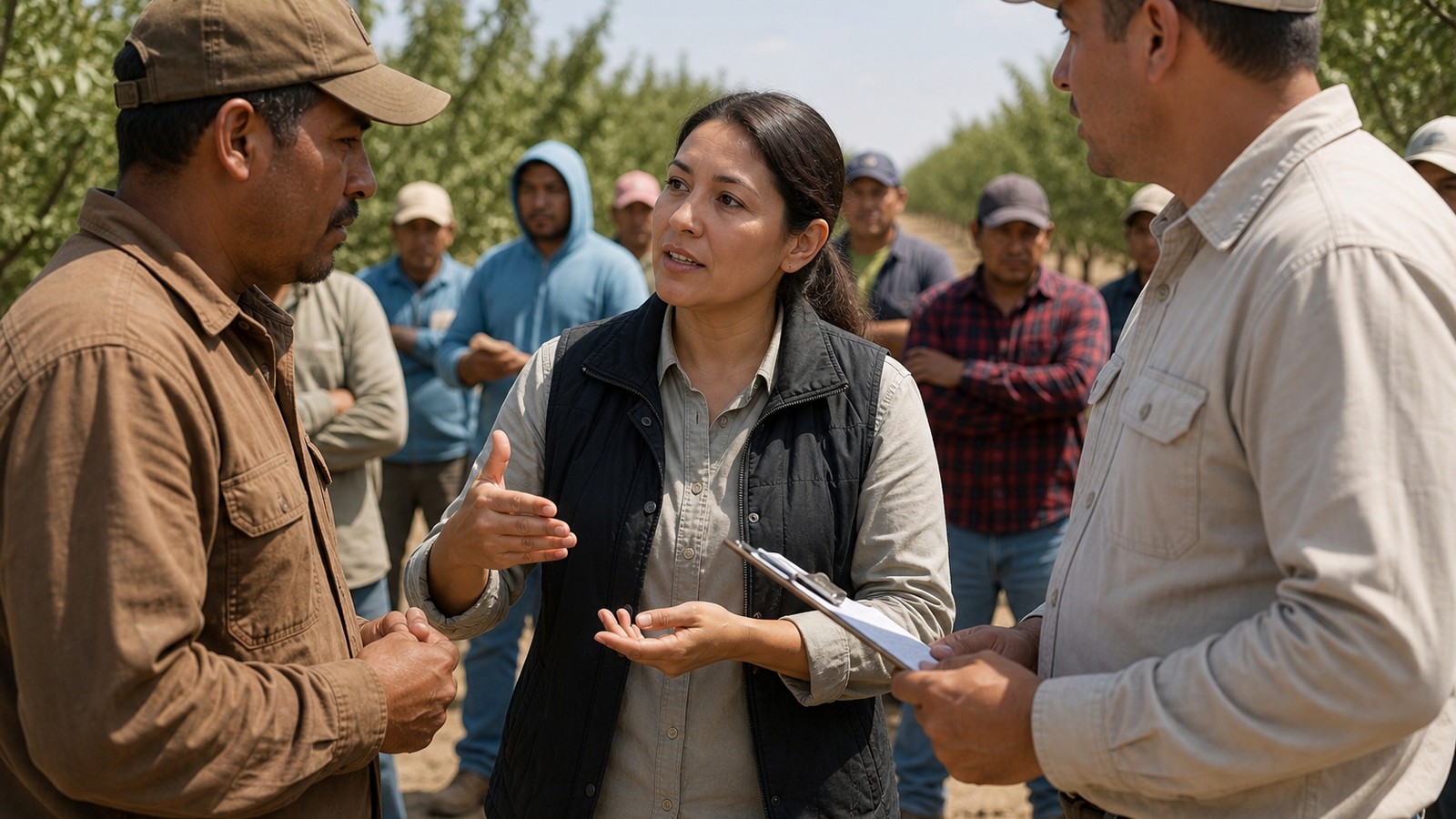
On-site interpreting places a professional interpreter physically in the field or packing house. This is the right choice for safety trainings, equipment demonstrations, and any situation where the interpreter needs to observe body language, point to physical equipment, or manage a group conversation.
Remote interpreting, delivered by phone or video, works well for scheduled HR meetings, workers' comp claims calls, and medical appointment interpreting when an in-person interpreter is not practical or available quickly enough. Remote interpreting also gives growers faster access to less common languages that may not have a local on-site interpreter available in Fresno.
Most growers use a combination: on-site interpreting for recurring safety and orientation needs, and remote interpreting for on-demand HR, medical, and workers' comp situations.
Workers' Compensation and Interpreting Obligations
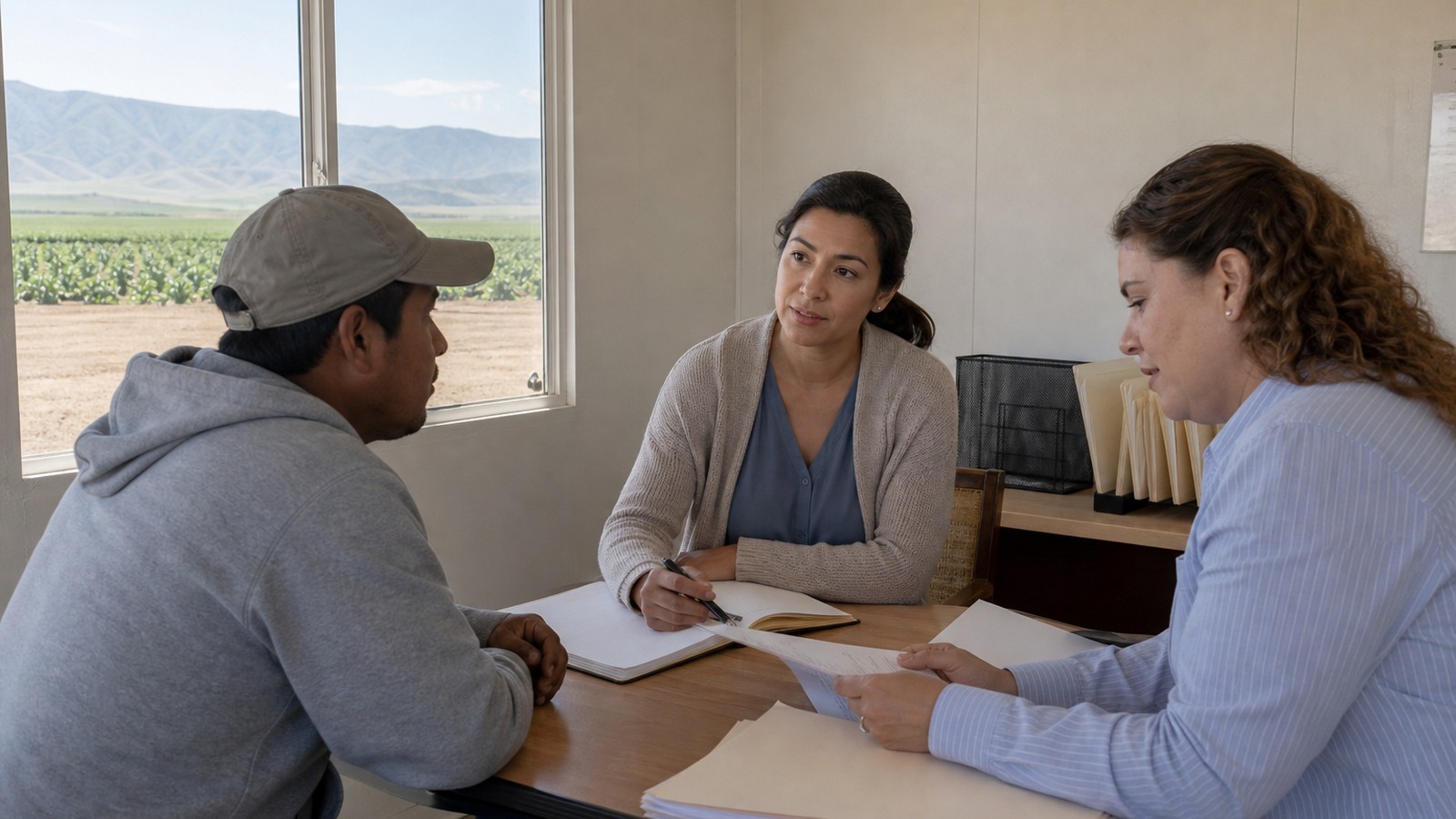
California law requires that injured workers receive interpreting services at no cost during workers' comp medical evaluations, depositions, and claims proceedings. For Fresno's agricultural employers, this obligation starts the moment an injury is reported. An interpreter should be present — on-site or via qualified remote interpreting — for the initial injury report, any qualified medical evaluation (QME), and every subsequent claims-related appointment.
Getting this wrong creates real exposure. An inaccurate or informal interpretation (using a bilingual coworker instead of a certified interpreter, for example) can be challenged later in the claims process, delaying resolution and increasing legal costs for the employer. Growers who work with a dedicated interpreting partner avoid this risk by having certified interpreters available on short notice whenever a claim moves forward.
Choosing Agricultural Interpreting Services in Fresno
When evaluating agricultural interpreting services in Fresno, growers and farm labor contractors should confirm:
- Certified interpreters, not just bilingual staff, especially for workers' comp and medical situations.
- Language coverage that matches the actual crew — Spanish plus the indigenous and Asian languages common in Central Valley agriculture.
- Both on-site and remote capability, so coverage doesn't depend on a single format.
- Fast response times for injury reporting and urgent safety communication.
- Experience with agricultural settings, including familiarity with Cal/OSHA heat illness and pesticide safety terminology.
A partner that meets all five criteria reduces both safety risk and claims exposure across a growing season.
Frequently Asked Questions
Does California law require interpreters for farmworker safety training? Cal/OSHA requires that safety training, including heat illness prevention and pesticide handling instruction, be delivered in a language and vocabulary employees understand. For crews where English is not the primary language, that means qualified interpreting or bilingual training delivery.
Who pays for interpreting during a workers' comp claim in Fresno County? Under California workers' compensation law, the employer or claims administrator is responsible for providing interpreting services at no cost to the injured worker for medical evaluations, depositions, and hearings.
Can a bilingual employee interpret instead of hiring a professional? It is not recommended for safety training, medical evaluations, or workers' comp proceedings. Informal interpretation by a coworker can introduce errors and may be challenged later, especially in a disputed claim. Certified interpreters are trained to interpret accurately and impartially.
How quickly can a Fresno grower get an interpreter after a workplace injury? Response times vary by provider, but growers should choose an agricultural interpreting partner that offers both on-site scheduling and immediate remote interpreting so an injury report is never delayed by language access.
Get Interpreting Support for Your Fresno Operation
Ortiz Schneider has supported California growers, packing houses, and farm labor contractors with certified on-site interpreting and remote interpreting across the Central Valley since 1999. Whether you need a certified interpreter for a safety training session in the field, a workers' comp claim in Fresno, or ongoing HR support for a multilingual crew, our team can help. Request a quote today to talk through your Fresno operation's interpreting needs.