Agricultural Interpreting Services in California: A Heat-Safety Guide
Quick Summary:
Agricultural interpreting services in California help employers, safety teams, clinicians, claims administrators, and injured workers communicate clearly before and after a heat-related incident. A strong language-access plan identifies each worker’s preferred language, uses qualified interpreters for high-stakes conversations, and prepares both on-site and remote coverage before temperatures climb.
California agriculture depends on people who speak many languages, including Spanish, Mixteco, Zapoteco, Punjabi, Tagalog, and others. During a routine morning meeting, an experienced bilingual supervisor may help the team understand basic instructions. During a heat emergency, medical evaluation, deposition, or workers’ compensation hearing, however, informal language help can leave important details unclear.
Professional interpreting creates a more reliable communication channel. It helps a worker describe symptoms accurately, allows a supervisor to confirm that emergency instructions were understood, and gives clinicians and claims professionals a clearer record of what happened. The goal is not merely to translate words. It is to support accurate, impartial communication when safety, health, and legal rights may be affected.
Table of Contents
- Why language access matters during California heat season
- Where interpreters support agricultural safety communication
- How to choose the right language and interpreter
- When an injury becomes a workers’ compensation matter
- On-site versus remote agricultural interpreting
- A practical readiness checklist
- Frequently asked questions
Why Language Access Matters During California Heat Season
California’s outdoor heat standard applies to outdoor workplaces. Cal/OSHA guidance explains that shade must be present when temperatures exceed 80°F and high-heat procedures apply when temperatures reach 95°F. Employers must also provide drinking water, training, emergency-response procedures, and close observation during acclimatization and heat waves.
Those protections only work when employees understand how to use them. A written plan may be technically complete, but it cannot protect a worker who does not understand when to take a cool-down rest, how to report symptoms, or who will call emergency services.
Agricultural operations face a particular communication challenge because one crew may include several language communities. A worker identified as “Spanish speaking” may primarily speak Mixteco or Zapoteco and use Spanish only as a second language. Asking the right intake questions is therefore essential:
- What language does the worker prefer for important conversations?
- Is there a regional or Indigenous-language variation to identify?
- Does the worker read that language, or is oral communication more effective?
- Will an interpreter need agricultural, medical, or workers’ compensation experience?
- Is an on-site interpreter required, or can video or telephone interpreting work?
These questions should be answered before an emergency. Waiting until a worker becomes ill can lead to rushed scheduling and avoidable misunderstandings.
Where Agricultural Interpreting Services in California Support Safety
Professional interpreters can support communication at several points in an agricultural safety program. The appropriate role depends on the setting and the level of risk.
Safety Meetings and Heat-Illness Training
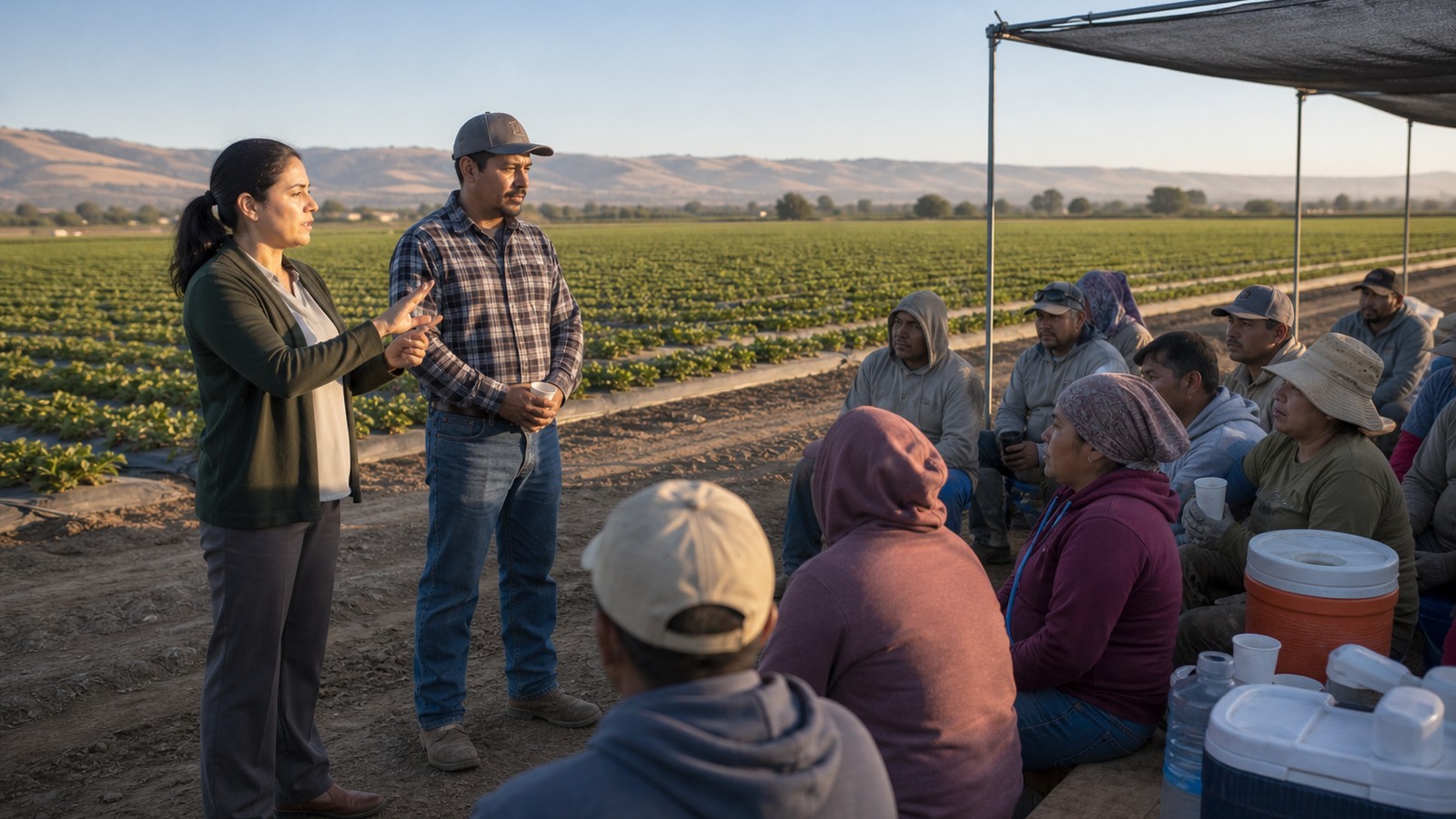
An interpreter can help a trainer explain water access, shade, cool-down rests, acclimatization, emergency contacts, wildfire smoke precautions, and high-heat procedures. Interpreting also gives employees a way to ask questions in their preferred language instead of simply nodding through unfamiliar terminology.
Cal/OSHA provides heat-illness resources and has conducted agricultural outreach in English and Spanish. Employers serving other language communities may need additional support to make the same concepts understandable to every crew member.
Daily Tailgate Meetings
A short pre-shift meeting can cover forecast conditions, work-rest schedules, shade locations, water placement, crew observation, and emergency transportation. For stable teams, scheduled interpreting during these meetings can reduce confusion later in the day.
Incident Response
When someone shows possible signs of heat illness, communication must be direct and fast. An interpreter may help the worker explain symptoms, recent water intake, medications, and how long they have felt unwell. The interpreter should not diagnose the condition or replace emergency services. Their role is to interpret accurately so the worker and responders can understand one another.
Supervisory Interviews and Documentation
After an incident, employers may need to document the timeline, identify witnesses, and review whether procedures were followed. A neutral interpreter can help separate what the worker actually said from assumptions or summaries made by another employee.
How to Choose the Right Language and Interpreter
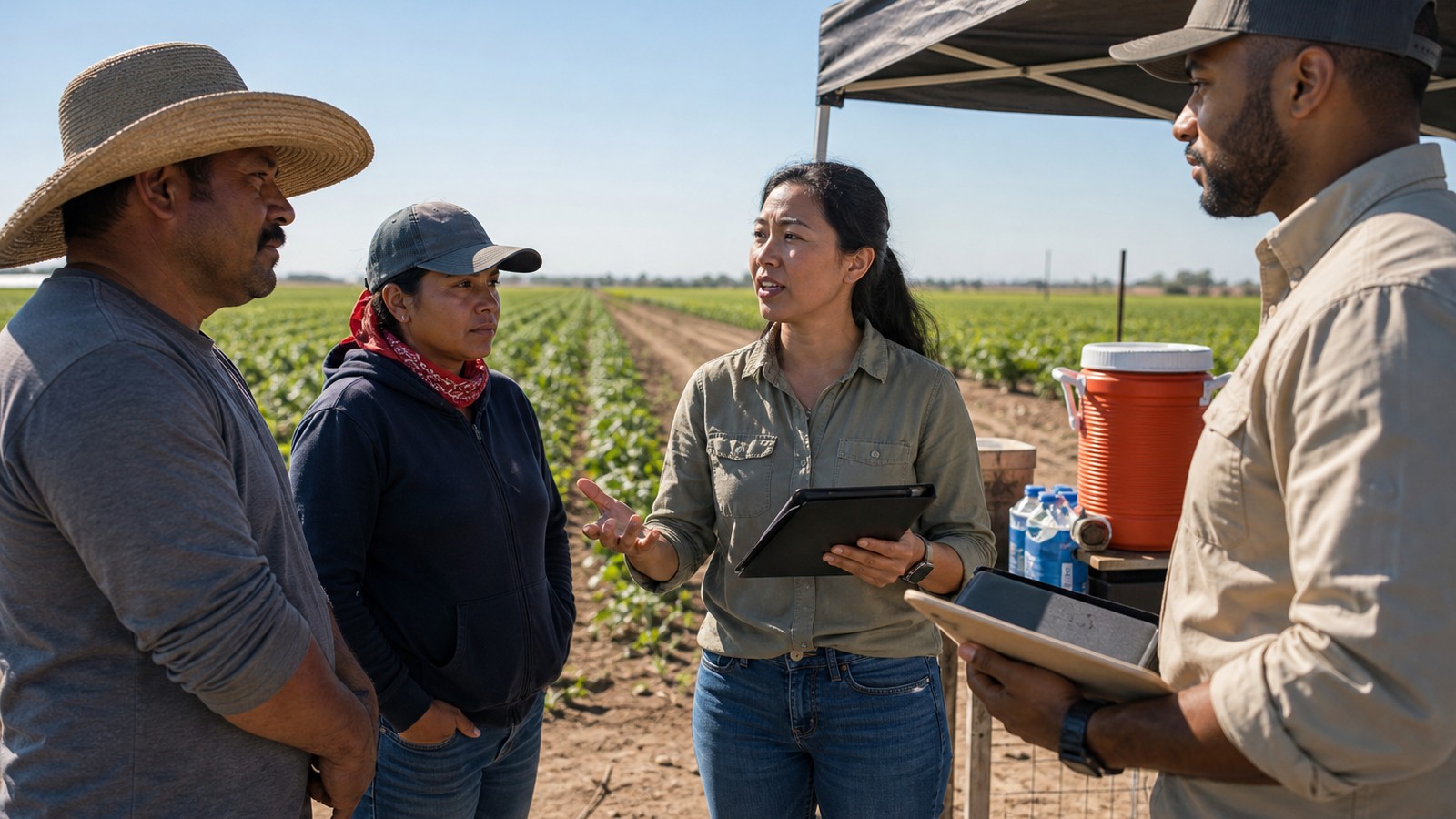
A reliable request starts with more than the label “Spanish.” Ortiz Schneider’s language network includes Indigenous languages such as Mixteco Alto, Mixteco Bajo, Nahuatl, and Zapoteco, along with many other languages used throughout California.
When scheduling, provide:
- The worker’s preferred language and dialect, when known
- The date, time, and exact location
- The type of event: training, clinic visit, QME, deposition, or hearing
- Whether the appointment will be on-site, by video, or by phone
- The expected duration
- Any specialized agricultural, medical, or legal terminology
- Site-access instructions and required personal protective equipment
For a general safety meeting, subject-matter familiarity may be the key qualification. For a medical-legal exam in a workers’ compensation claim, California rules are more specific. Title 8, section 9795.1.6 states that, to qualify for payment for interpreter services at a medical treatment appointment or medical-legal exam, the interpreter must be certified, certified for those appointments, or provisionally certified under the rule’s conditions.
That distinction matters. A bilingual coworker who helps with ordinary communication is not automatically qualified for a medical-legal evaluation. Claims administrators and appointment coordinators should confirm the required credential before the appointment.
When an Injury Becomes a Workers’ Compensation Matter
A heat-related illness or other agricultural injury can move quickly from first aid to medical treatment and a workers’ compensation claim. Each transition introduces new terminology and new participants: supervisors, clinic staff, claims administrators, attorneys, qualified medical evaluators, and the Workers’ Compensation Appeals Board.
Consistent interpreting helps preserve the worker’s account across those settings. It can support communication during:
- Initial medical treatment
- Follow-up visits and specialist consultations
- Qualified Medical Evaluator or Agreed Medical Evaluator appointments
- Recorded statements and investigations
- Depositions
- Settlement conferences and WCAB hearings
The Division of Workers’ Compensation explains that interpreter services must be provided in several workers’ compensation settings, including depositions, appeals board hearings, medical-legal examinations, and medical treatment appointments. The qualification requirements can vary by event, language, and applicable rule, so schedulers should verify the current standard rather than assume that one credential fits every assignment.
Ortiz Schneider provides language support throughout the California workers’ comp process, including medical evaluations, treatment, depositions, hearings, investigations, and statements.
On-Site Versus Remote Agricultural Interpreting
Both delivery methods can be useful. The right choice depends on urgency, complexity, connectivity, and the worker’s needs.
When On-Site Interpreting Fits Best
On-site interpreting services are often the stronger choice for:
- Large crew training with questions and demonstrations
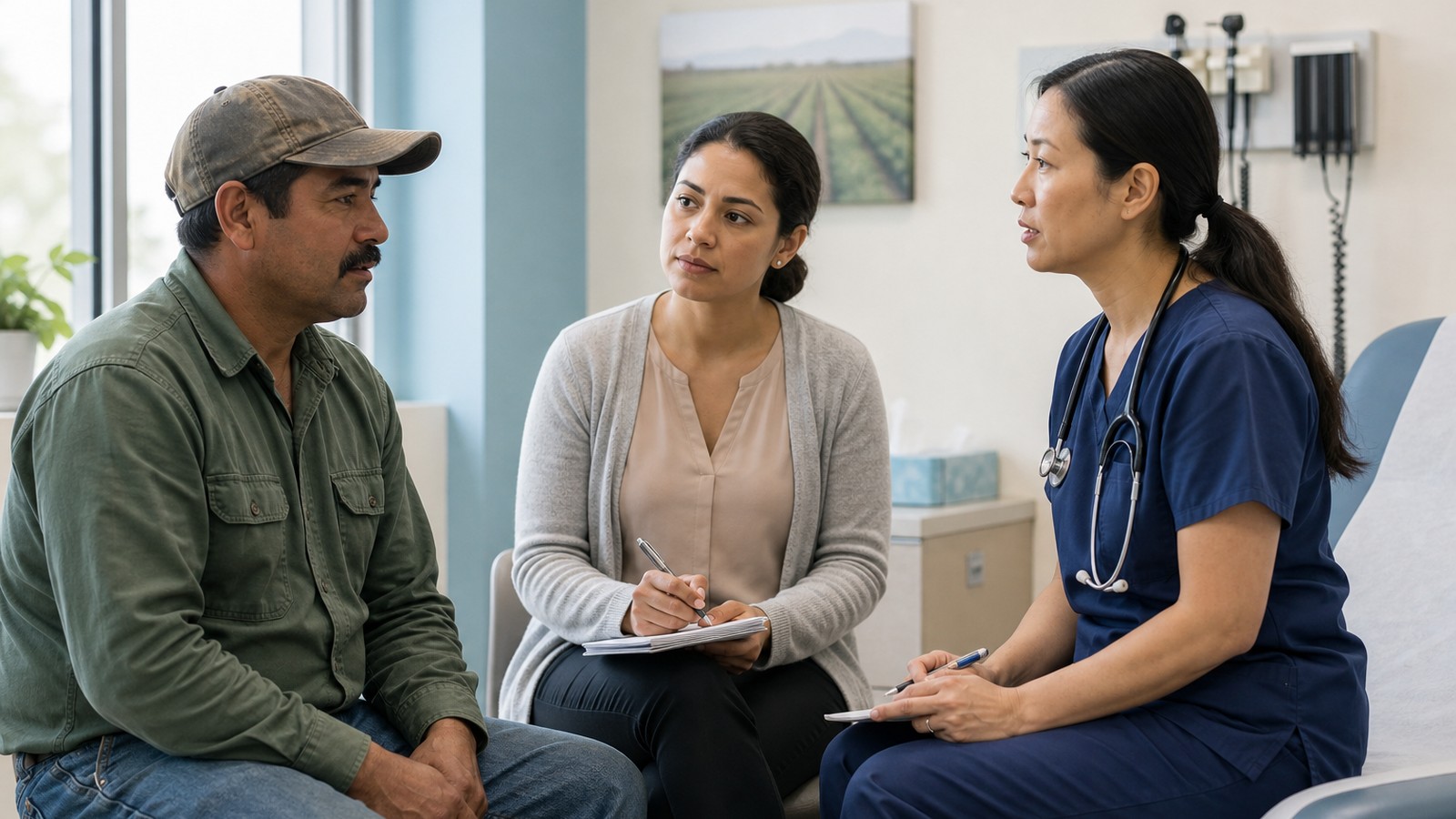
- Sensitive medical or legal conversations
- Depositions and hearings that require in-person participation
- Remote fields or facilities with unreliable internet or cellular service
- Encounters where body language and physical demonstrations matter
When Remote Interpreting Fits Best
Video or telephone interpreting may work well for:
- Unplanned clinic visits
- Brief follow-up appointments
- Less-common languages when a local interpreter is unavailable
- Meetings involving participants in several locations
- Time-sensitive communication when travel would create a delay
Remote service requires practical preparation. Test the connection, protect privacy, position the device so everyone can hear, and have a backup telephone number available. In noisy packinghouses or field environments, on-site service may be more dependable.
A Practical Agricultural Language-Access Checklist
Before heat season or another high-risk work period, employers and claims teams can use this checklist:
- Map the workforce’s preferred languages. Ask workers directly and record dialect details without making assumptions based on nationality.
- Review the heat plan for understandable communication. Confirm that training, emergency procedures, and reporting instructions can be delivered in the languages employees use.
- Preselect an interpreting provider. Establish scheduling contacts, billing procedures, and after-hours options before an incident.
- Separate routine bilingual help from high-stakes interpreting. Define when a qualified professional is required.
- Prepare location details. Include gate codes, field coordinates, parking instructions, PPE requirements, and the on-site contact.
- Build remote backup coverage. Keep a tested phone or video option for urgent and rare-language requests.
- Document the encounter. Record the interpreter’s name or identifier, language, delivery method, date, and purpose according to the organization’s policy.
- Review after incidents. Identify communication delays and update the plan before the next emergency.
For operations near the Central Coast, Ortiz Schneider also provides interpreting and translation services in Salinas, supporting agricultural, workers’ compensation, healthcare, legal, and business communication.
Build the Language Plan Before the Next Hot Day
Heat-safety communication is most effective when it is planned, not improvised. Identifying languages, selecting qualified professionals, and testing on-site and remote options gives agricultural employers and claims teams a clearer path when conditions become urgent.
Ortiz Schneider has supported California organizations with professional interpreting and translation since 1999. The team matches each assignment with the appropriate language, delivery method, and subject-matter experience.
Request a quote for an upcoming agricultural safety meeting, medical appointment, workers’ compensation event, or ongoing language-access program.
Frequently Asked Questions
Why should agricultural employers use professional interpreters for heat-safety training?
Professional interpreters provide a more accurate and impartial communication channel than relying on an available coworker. They allow workers to ask questions in their preferred language and help trainers explain safety procedures consistently. The interpreter supports communication; the employer remains responsible for the safety program and training content.
Does every bilingual employee qualify as a workers’ compensation interpreter in California?
No. Language ability alone does not establish the credential required for every workers’ compensation event. California Title 8, section 9795.1.6 describes certification and provisional-certification conditions for interpreters seeking payment at medical treatment appointments and medical-legal exams. Requirements should be checked for the specific appointment.
Can Ortiz Schneider provide Indigenous-language interpreters for California agriculture?
Ortiz Schneider’s network includes Mixteco Alto, Mixteco Bajo, Nahuatl, Zapoteco, and many other languages. Availability depends on the language, location, date, and assignment type, so additional lead time is recommended for less-common languages.
Is on-site or remote interpreting better for a farm or packinghouse?
On-site interpreting is often best for group training, sensitive encounters, demonstrations, or locations with poor connectivity. Remote interpreting can be effective for urgent clinic visits, short follow-ups, and languages that are difficult to source locally. Many employers use both.
How much notice should a California agricultural employer provide?
Provide as much notice as possible, especially for Indigenous languages, specialized medical-legal assignments, and remote field locations. A complete request should include the language, dialect, date, location, event type, expected duration, and site-access requirements.