Family Court Interpreting in California: What Families and Attorneys Need to Know
Quick Summary:
Family court interpreting in California covers custody hearings, divorce proceedings, domestic violence restraining orders, mediation, and child support matters. Many California courts provide interpreters for qualifying case types at no cost to the family, but availability varies by courthouse and language, and private interpreting fills the gaps for depositions, attorney meetings, and mediation sessions outside the courtroom. This guide explains when an interpreter is needed, what California courts generally provide, and how to request qualified support.
Language access has a direct effect on outcomes in California family court, where custody arrangements, support orders, and safety are decided. Family court interpreting in California helps limited-English-proficient (LEP) parents, spouses, and witnesses understand proceedings and communicate their own testimony accurately, rather than relying on a bilingual relative or a rushed, informal translation. For attorneys, case managers, and families preparing for a hearing, knowing when an interpreter is available, how to request one, and where private interpreting fills the gap can prevent delays and protect the record.
What Is Family Court Interpreting in California?
Family court interpreting covers the full range of proceedings handled in California's family law divisions: divorce and legal separation, child custody and visitation, child and spousal support, paternity, guardianship, and domestic violence restraining orders. A qualified interpreter renders everything said in the courtroom — the judge's instructions, opposing counsel's questions, and the LEP party's own testimony — into the other language in real time, without adding, omitting, or softening content.
This is different from casual bilingual help. Family law hearings often turn on precise wording: a support calculation, a custody condition, or the exact language of a restraining order. An interpreter trained for legal settings understands courtroom register, procedural vocabulary, and the ethical duty to stay neutral, which is why courts and reputable language agencies distinguish "interpreting" (spoken) from "translation" (written) and treat courtroom work as a specialized skill rather than a general bilingual favor.
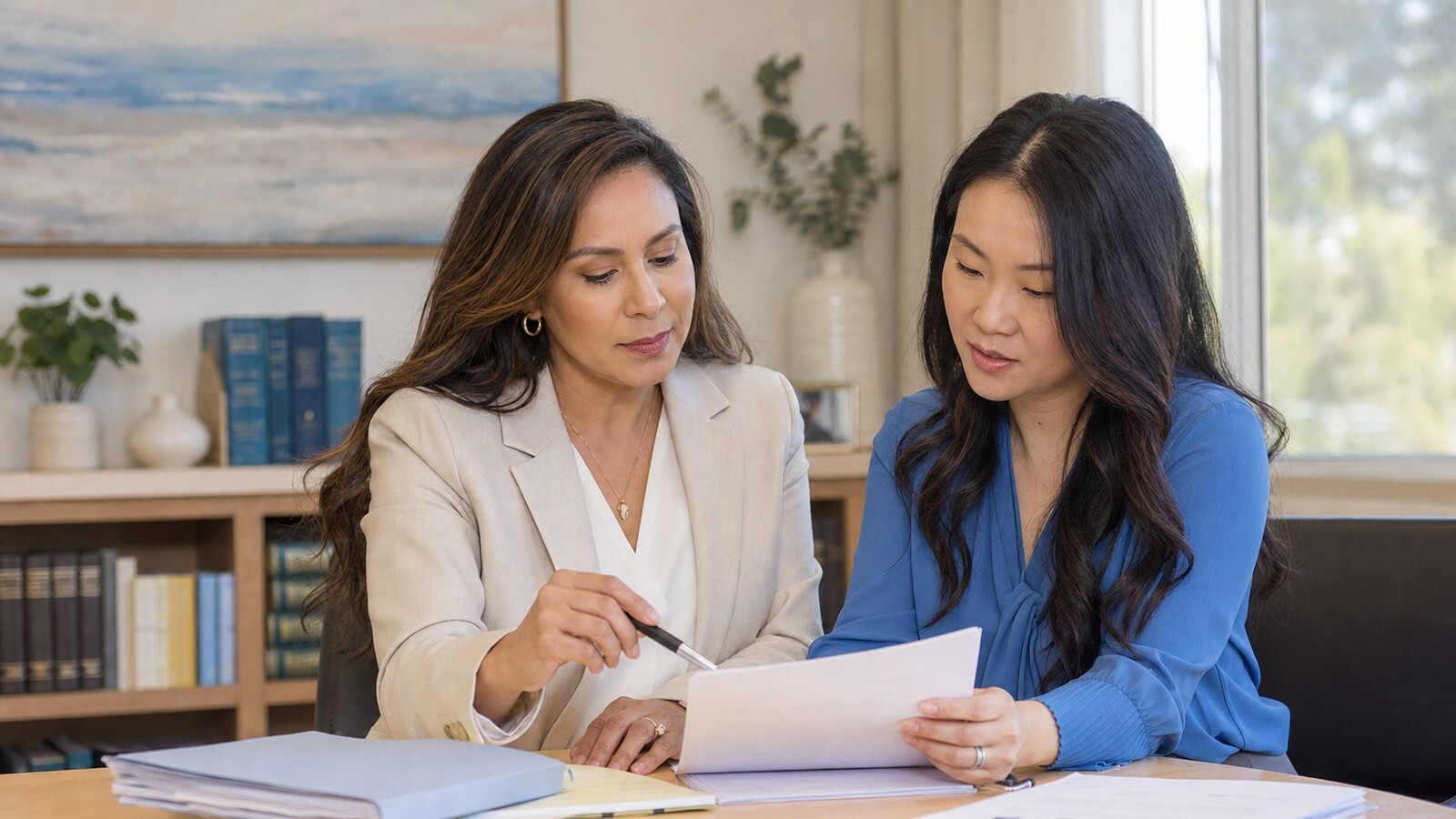
When Families Need an Interpreter in Family Court
Common moments where LEP parties in California typically need an interpreter include:
- Custody and visitation hearings, where parents describe their proposed parenting plan and respond to the other side's concerns.
- Domestic violence restraining order (DVRO) hearings, where a petitioner or respondent must testify clearly about safety and past events.
- Mediation and Family Court Services appointments, where parents work with a court mediator to reach a custody recommendation.
- Child and spousal support hearings, involving income disclosures and support calculations.
- Paternity and guardianship proceedings, and any hearing where a party's due-process rights depend on understanding what is happening.
- Attorney meetings and case preparation outside the courtroom, where accurate communication shapes the strategy that eventually gets presented to the judge.
Even when a hearing itself is short, misunderstanding a single instruction — a filing deadline, a required document, or the terms of a temporary order — can affect the outcome of a family's case.
California's Language Access Rules in Family Court
California has expanded language access in civil and family courts over the past decade, and many California courts provide interpreters for qualifying family law matters — including domestic violence, custody, and other civil proceedings — at no cost to the party who needs one. The California judiciary maintains a statewide court interpreter certification and registration program through the Judicial Council, so interpreters used in the courtroom are expected to meet defined qualification standards for the languages the program covers.
That said, availability is not uniform. Coverage can vary by courthouse, calendar, case type, and language — some languages are in short supply even where courts actively recruit interpreters — and self-represented litigants sometimes discover the gap only when a hearing is already scheduled. This guidance is general information, not legal advice; families and attorneys should confirm current interpreter availability directly with the specific superior court and courtroom clerk handling the case, and plan ahead for languages that are harder to staff. For anything outside the courtroom itself — attorney consultations, mediation sessions, document review, or depositions connected to a family law matter — courts generally do not provide an interpreter, which is where a private language services provider like Ortiz Schneider fits in.
On-Site vs. Remote Interpreting for Family Law Matters
Family law cases often involve sensitive, high-stress conversations, so the choice between in-person and remote interpreting matters.
On-site interpreting places a professional interpreter in the room for hearings, mediation sessions, and attorney meetings. This is often the better fit for domestic violence hearings, contested custody trials, or any setting where reading tone, body language, and the emotional weight of testimony affects how the interpreter conveys meaning. Ortiz Schneider's on-site interpreting services place trained interpreters at courthouses, mediation centers, and law offices throughout California.
Remote interpreting — delivered by phone (OPI) or video (VRI) — works well for shorter check-ins, document review calls, case status conferences, or when a family's language pairing makes an on-site match difficult on short notice. Ortiz Schneider's remote interpreting services give attorneys and families a fast option when scheduling or geography rules out an in-person interpreter.
Many family law practices use both: on-site interpreting for hearings and mediation, remote interpreting for the shorter calls and prep sessions in between.
How to Request a Family Court Interpreter
- Confirm the hearing date and case type early. Courthouses that provide interpreters for qualifying family law matters generally need advance notice, especially for less common languages.
- Ask the courtroom clerk or self-help center directly whether an interpreter will be provided for the specific hearing type, and get that confirmation in writing or by case number where possible.
- Plan for everything outside the courtroom. Attorney meetings, mediation prep, and document translation are usually the family's or firm's responsibility to arrange.
- Book a private interpreter as a backup or supplement, particularly for high-stakes hearings, less common languages, or same-week scheduling needs.
- Confirm interpreter qualifications before the hearing — for family law matters, ask whether the interpreter is certified or registered through the California court interpreter program for the language needed.
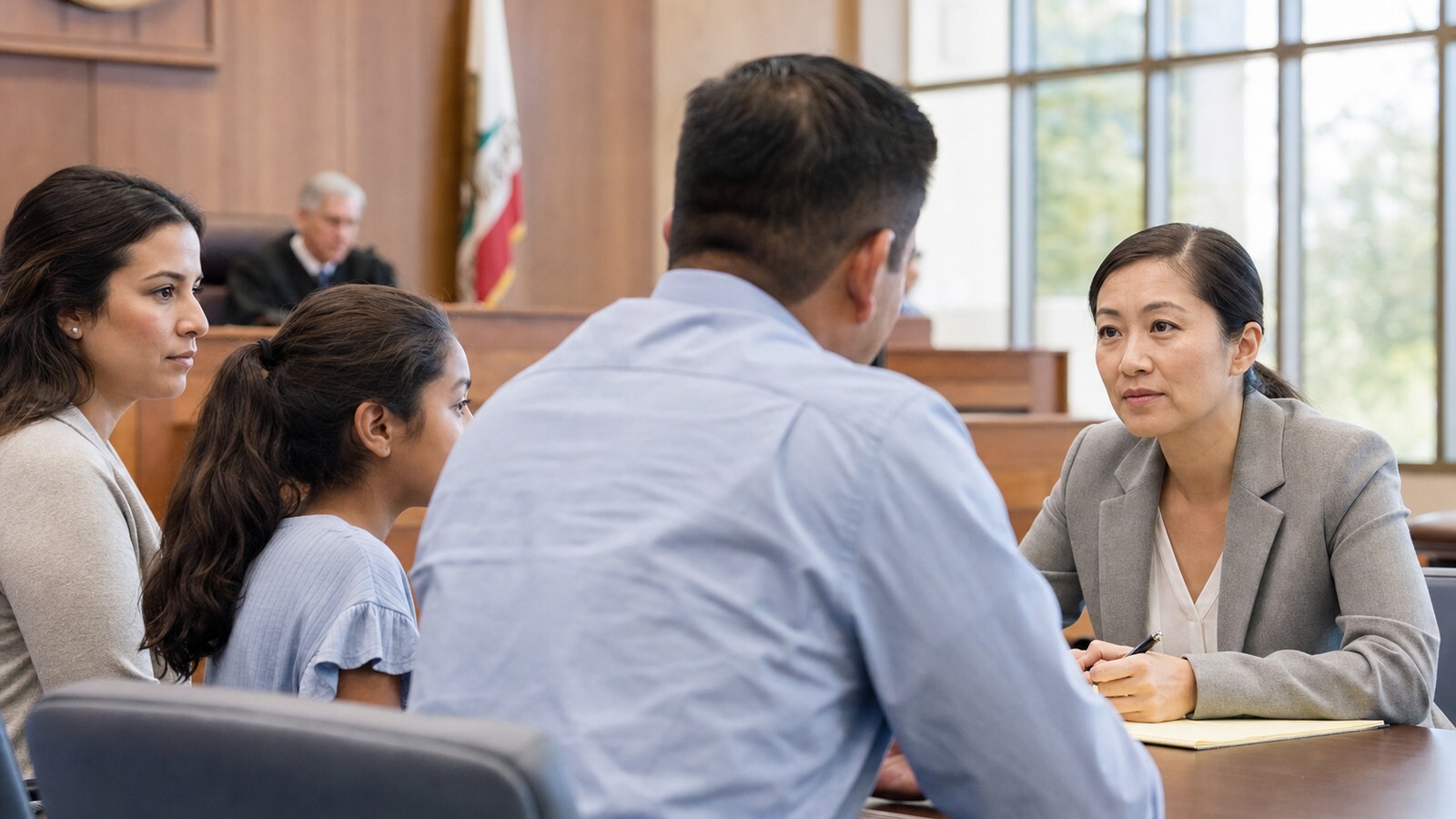
How Ortiz Schneider Supports Family Law Attorneys and Families
Ortiz Schneider was founded in Santa Barbara by Lorena Ortiz Schneider, who holds a master's degree in Translation and Conference Interpretation from the Middlebury Institute of International Studies at Monterey and previously worked with the U.S. Department of State. That background shaped an agency built around precision, confidentiality, and professionalism in high-stakes language settings — the same qualities family law cases demand.
For attorneys and families working through California's legal system, Ortiz Schneider provides on-site interpreters for hearings and mediation, remote interpreting for faster-turnaround needs, and document translation for filings, custody agreements, and supporting evidence, across a wide range of languages spoken throughout California. Because family law scheduling can move quickly — a hearing date confirmed one week, a mediation session added the next — having a language partner who can staff both planned and short-notice requests helps keep a case moving without a language barrier slowing it down.
Attorneys, mediators, and families who need an interpreter for an upcoming family law matter can request a quote from Ortiz Schneider to discuss language needs, scheduling, and on-site or remote coverage.
Frequently Asked Questions
Does the court provide a free interpreter for family law hearings in California? Many California courts provide interpreters at no cost for qualifying family law matters, particularly domestic violence and other civil proceedings, but coverage varies by courthouse, case type, and language. Confirm directly with the courtroom clerk or self-help center handling the case, and plan ahead — availability is not guaranteed for every hearing or language.
Does the court interpreter also help outside the courtroom? Generally no. Court-provided interpreters typically cover the hearing itself. Attorney meetings, mediation prep, document review, and depositions connected to a family law case usually require a private interpreter arranged by the family or law firm.
What languages does Ortiz Schneider support for family court matters? Ortiz Schneider works across a wide range of languages spoken throughout California's diverse communities. Contact the team with the specific language and hearing details to confirm interpreter availability.
Should I use a family member to interpret in a custody hearing? It's not recommended. Family members are not neutral, may not know courtroom or legal vocabulary, and their involvement can raise questions about accuracy or bias in a case where the record matters. A professional, impartial interpreter protects both the accuracy of the testimony and the integrity of the proceeding.
How far in advance should I request an interpreter for a family court hearing? As early as possible. Both court-provided and private interpreter requests are easier to fill with advance notice, especially for less commonly requested languages or when a hearing is added to the calendar quickly.
Can Ortiz Schneider provide both in-person and video interpreting for the same case? Yes. Many family law clients use on-site interpreting for hearings and mediation and remote interpreting for shorter calls, document review, or case check-ins in between.
This article provides general operational information about language access in California family courts and is not legal advice. For guidance on a specific case, consult a licensed California family law attorney or the court handling the matter.