The Healthcare Provider's Guide to Language Access: Ensuring HIPAA Compliance with VRI
California's healthcare landscape is one of the most linguistically diverse in the nation. With over 200 languages spoken across the state, healthcare providers face a critical challenge: delivering high-quality care while ensuring meaningful communication with patients who have limited English proficiency. Video Remote Interpreting (VRI) has emerged as a powerful solution, but only when implemented with rigorous attention to HIPAA compliance and patient privacy.
For hospitals, clinics, and medical practices throughout California, understanding how to integrate VRI services while maintaining strict regulatory compliance isn't optional. It's essential to both patient safety and legal protection.
What Is VRI and Why Does HIPAA Compliance Matter?
Video Remote Interpreting connects healthcare providers with certified medical interpreters via secure video conferencing technology. Unlike phone interpreting, VRI allows interpreters to observe visual cues, read body language, and provide more nuanced interpretation during medical consultations.
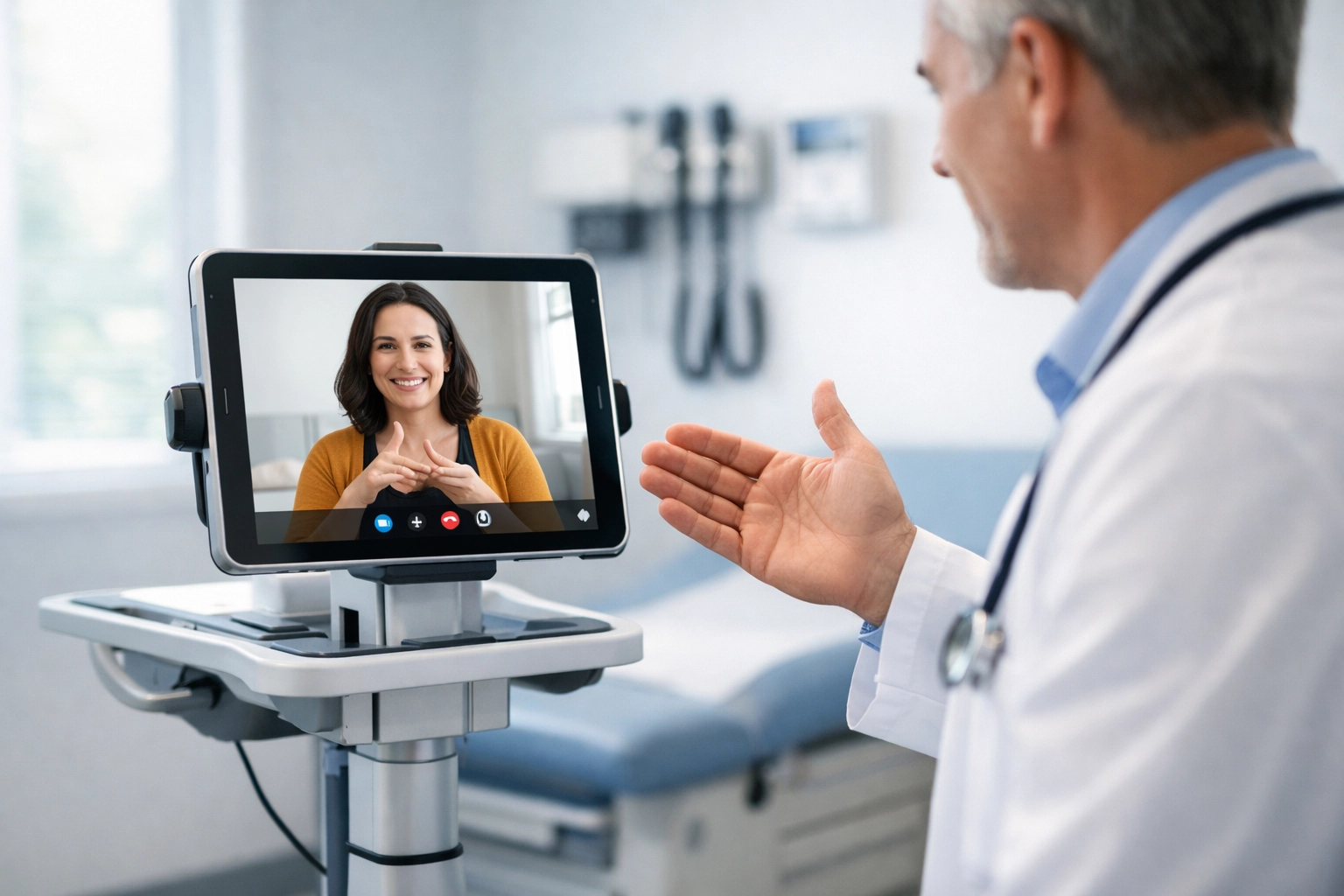
The intersection of VRI and HIPAA compliance becomes critical because interpreters have direct access to Protected Health Information (PHI) during every session. Any VRI platform used in a healthcare setting must employ encrypted communication channels specifically designed to meet HIPAA standards. A single breach, whether through unsecured video connections, inadequate interpreter training, or poorly vetted technology platforms, can expose your organization to significant legal and financial consequences.
For California healthcare providers seeking medical interpreting California solutions, the stakes are particularly high. State regulations often exceed federal requirements, making it essential to workwith language service providers who understand both HIPAA and California-specific compliance standards.
Core HIPAA Requirements for Healthcare VRI Services
Secure Platform Architecture
Your VRI platform must protect PHI at every touchpoint. This means end-to-end encryption for all video and audio transmission, secure data storage protocols, and access controls that limit who can view patient information during interpretation sessions.
When evaluating VRI interpreting California providers, verify that their platforms are built specifically for healthcare environments. Generic video conferencing tools, even popular enterprise solutions, rarely meet the stringent security requirements necessary for medical interpreting.
Business Associate Agreements
HIPAA requires healthcare providers to establish Business Associate Agreements (BAAs) with any vendor who handles PHI on their behalf. Your VRI provider must be willing to sign a comprehensive BAA that clearly outlines their responsibilities for safeguarding patient data, including data security measures and encryption protocols, breach notification procedures, interpreter training and certification requirements, data retention and destruction policies, and compliance audit rights.
A reputable provider of remote interpreting services in California will have standardized BAAs ready and will understand exactly what healthcare organizations need to satisfy HIPAA requirements. If your team also relies on in-person coverage for certain visits, it helps to align BAA expectations across modalities so your compliance approach is consistent for both VRI and on-site interpreting.
Interpreter Credentials and Training

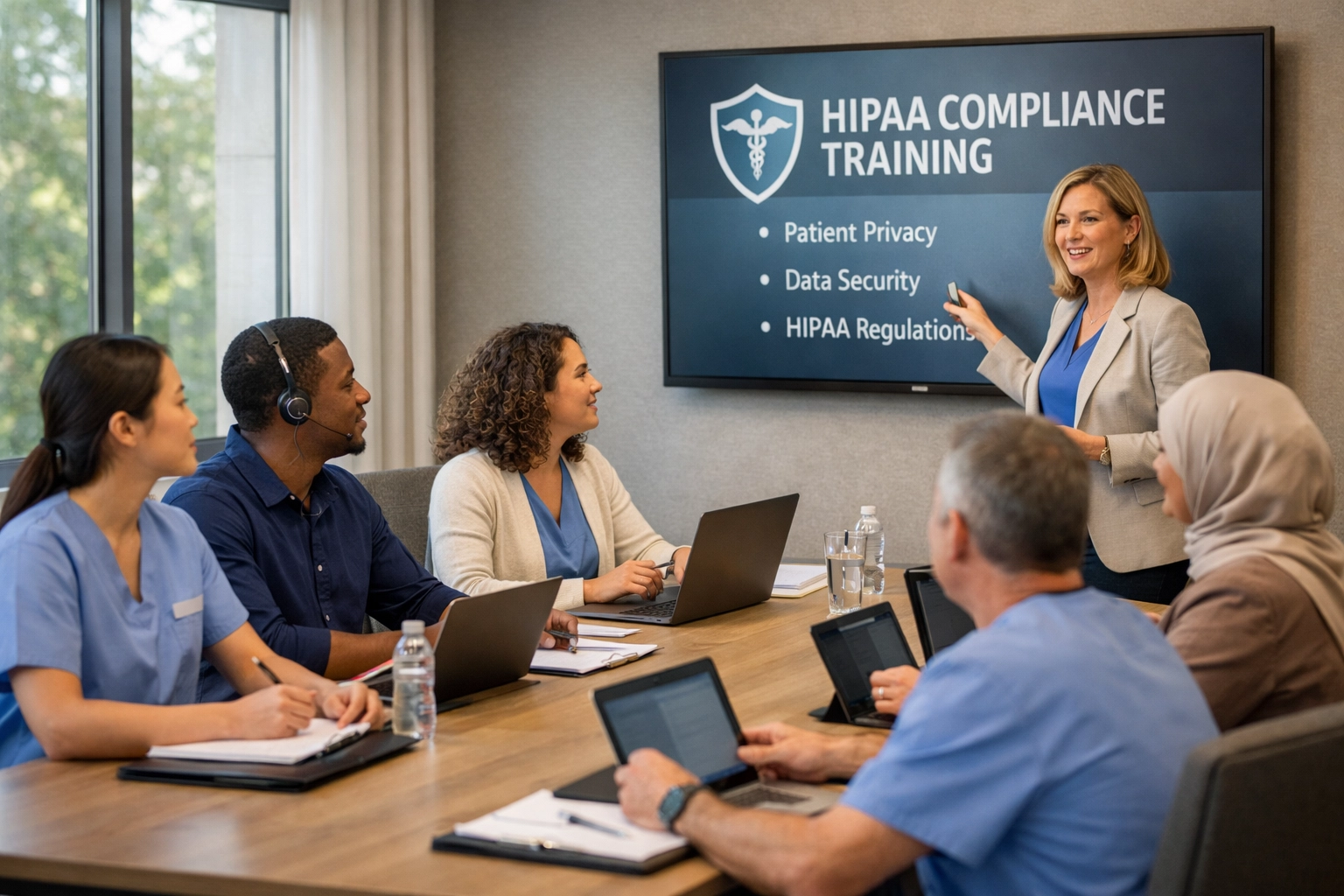
Medical interpreters must receive ongoing HIPAA training that goes beyond basic privacy awareness. That includes the Minimum Necessary Standard (accessing only the PHI required for their role), proper handling of sensitive patient information during and after sessions, secure communication and documentation procedures, and the ability to recognize potential privacy breaches and follow the right reporting protocols.
At Ortiz Schneider Interpreting & Translation, our medical interpreters undergo rigorous HIPAA training and recertification to ensure they maintain the highest standards of patient confidentiality across all medical interpreting California engagements. To see how this fits into a broader language-access program, you can also review our healthcare interpreting services and how we support both in person and VRI interpreting California workflows.
Strategic Benefits of VRI for California Healthcare Providers
Immediate Access to Qualified Interpreters
California's linguistic diversity means you need access to interpreters across dozens, sometimes hundreds, of languages. VRI eliminates geographic barriers, connecting you with certified medical interpreters within minutes, regardless of whether your facility is in Los Angeles, San Francisco, or rural areas with limited local interpreter availability.
This rapid response capability is particularly valuable in emergency departments, urgent care settings, and time-sensitive medical consultations where delays in communication can compromise patient outcomes.
Cost Efficiency Without Sacrificing Quality
While on-site interpreting remains the gold standard for complex medical procedures and extended consultations, VRI offers significant cost advantages for routine appointments, prescription reviews, and follow-up visits. You eliminate travel time and mileage expenses while maintaining the visual connection that phone interpreting lacks.
Enhanced Patient Experience
Patients who receive care in their preferred language report higher satisfaction scores, better comprehension of treatment plans, and improved health outcomes. VRI enables this level of care without the scheduling constraints and potential delays associated with coordinating on-site interpreter availability.
Implementation Best Practices for HIPAA-Compliant VRI
Conduct Comprehensive Risk Assessments
Before launching VRI services, evaluate your current language access infrastructure and document where PHI could be exposed. Focus on technology platforms and network security, interpreter vetting and training processes, staff understanding of HIPAA requirements related to language services, patient privacy notification procedures, and documentation and record-keeping practices.
This assessment provides the foundation for building a compliant VRI program that addresses your organization's specific risks and needs, and it also clarifies when your team should default to on-site interpreting California coverage for higher-risk encounters versus remote interpreting services California for routine visits.
Establish Clear Protocols and Workflows
Develop standardized procedures for when and how VRI services are deployed. Define criteria for choosing VRI versus on-site interpreting based on appointment type and complexity, and document the step-by-step process for initiating sessions so staff can launch VRI interpreting in California quickly and consistently. Include a clear backup plan for technology failures or interpreter unavailability, and set quality assurance mechanisms to monitor interpretation accuracy and HIPAA compliance.
Train all clinical and administrative staff on these protocols to ensure consistent, compliant implementation across your organization. If you’re formalizing your language-access approach, our healthcare interpreting services team can help you align workflows across in-person and remote interpreting services in California programs.
Partner with Specialized Healthcare VRI Providers
Generic language service providers may offer VRI, but healthcare requires specialized expertise. Prioritize partners that maintain networks of certified medical interpreters with healthcare-specific training, understand California healthcare regulations and compliance requirements, offer 24/7 access across a comprehensive range of languages, and provide transparent reporting on interpreter credentials and HIPAA training with proven experience supporting California healthcare organizations.
Since 1999, Ortiz Schneider has specialized in providing healthcare interpreting services that meet the exacting standards California medical providers require, including medical interpreting California coverage delivered via both in-person and remote interpreting services California options.
Implement Ongoing Monitoring and Quality Assurance
HIPAA compliance isn't a one-time achievement: it requires continuous vigilance. Establish regular auditing procedures to review VRI session logs for unusual access patterns or potential breaches, verify interpreter credentials and training certifications remain current, assess patient feedback regarding interpretation quality and privacy concerns, test technology platforms for security vulnerabilities, and update protocols as regulations evolve and new threats emerge.
Choosing the Right VRI Partner for Your California HealthcareOrganization
The VRI provider you select becomes an extension of your care team. They handle sensitive patient information and directly impact clinical outcomes. When evaluating potential partners, look for strong interpreter network depth (including rare and indigenous languages), healthcare specialization (medical terminology, clinical procedures, and communication best practices), and California expertise (including state-specific privacy laws that can exceed federal HIPAA requirements). You’ll also want technology infrastructure built for healthcare with enterprise-grade security and reliability, clear compliance documentation covering HIPAA safeguards and interpreter training, and responsive support that resolves technical or quality issues quickly.
If your organization uses a mixed model, confirm the provider can support a consistent standard of care across both VRI interpreting California and on-site interpreting, so clinicians aren’t forced into different workflows that create avoidable risk.
At Ortiz Schneider, we've built our remote interpreting services California specifically to address these requirements. Our family-run organization has served California healthcare providers since 1999, developing deep expertise in both the clinical and compliance dimensions of medical interpreting. Learn more about how we support healthcare teams statewide through our healthcare interpreting services.
Balancing Access, Quality, and Compliance
The most effective language access programs recognize that VRI is one tool within a comprehensive interpreting strategy. For high-stakes medical situations—complex diagnoses, surgical consultations, mental health assessments, or end-of-life care discussions—on-site interpreting often remains the superior choice despite higher costs.
VRI excels for routine appointments, prescription reviews, discharge instructions, and follow-up consultations where the visual component adds value over phone interpreting but the complexity doesn't demand in-person presence.
By strategically deploying both VRI and on-site interpreting based on clinical need, healthcare providers can optimize their language services budgets while maintaining the highest standards of care and HIPAA compliance.
Moving Forward with Confidence
Implementing HIPAA-compliant VRI services requires careful planning, the right technology partners, and ongoing commitment to both regulatory compliance and interpretation quality. For California healthcare providers managing increasingly diverse patient populations, getting this right isn't just about avoiding penalties; it's about delivering equitable, effective care to everyone who walks through your doors.
The language barriers your patients face shouldn't compromise the quality of care they receive. With properly implemented VRI services, supported by certified interpreters and robust HIPAA protections, you can ensure that every patient, regardless of their primary language, receives clear communication, understands their treatment options, and feels confident in the care they're receiving.
If you're ready to explore how HIPAA-compliant VRI can enhance language access at your California healthcare organization, our team is here to help. We'll assess your specific needs, explain our compliance measures, and design a solution that protects both your patients and your organization.
Request A Quote to discuss your medical interpreting needs with our team, or learn more about our comprehensive healthcare interpreting services designed specifically for California medical providers.