On-Site vs Remote vs Phone Interpreting: Which Is Better For Your California Business?
When you need professional interpreting services in California, you're immediately faced with a critical decision which delivery method will serve your business best? The landscape of interpreting services California has evolved dramatically, and today's organizations can choose between on-site interpreters who appear in person, video remote interpreting (VRI) that connects you with interpreters via video platform, and over-the-phone interpreting (OPI) for audio-only support. Each modality brings distinct advantages, and the right choice depends heavily on your industry, the complexity of your communication needs, and the context in which you're working.
The decision isn't always straightforward. A law firm conducting a deposition has very different requirements than an agricultural operation conducting safety training in Salinas, and a workers' compensation hearing demands different considerations than a routine medical appointment. Under-standing these nuances can mean the difference between seamless communication and costly misunderstandings that derail your objectives.
Understanding the Three Interpreting Modalities
Before diving into which option suits your California business, it's essential to understand what each modality actually delivers. On-site interpreting means a certified interpreter physically travels to your location, whether that's a courtroom in Los Angeles, a medical facility in San Jose, or a field training site in the Central Valley. This interpreter works face-to-face with all parties, capturing not just words but also visual cues, body language, and environmental context.
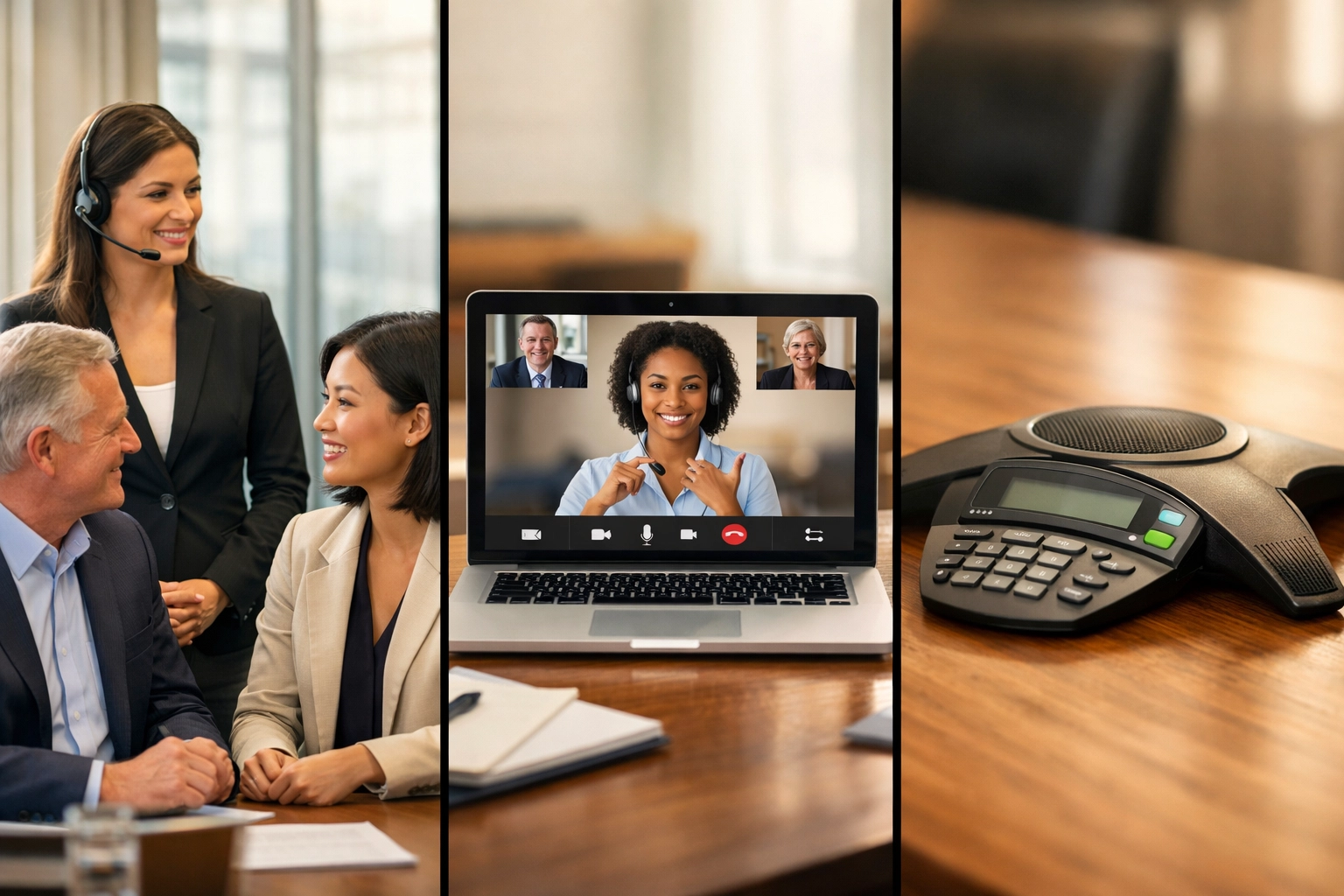
Remote interpreting services, often delivered through VRI platforms, connect you with professional interpreters via secure video conferencing technology. The interpreter appears on screen in real-time, allowing for visual connection while eliminating travel time and associated logistics. This technology has become increasingly sophisticated, with platforms specifically designed for high-stakes environ-ments where security and audio-visual quality are non-negotiable.
Phone interpreting, or OPI, strips the interaction down to audio-only communication. An interpreter joins your call via phone or teleconference platform, providing consecutive or simultaneous interpre-tation without visual elements. While this might seem limiting, OPI offers unparalleled speed and accessibility for certain situations where visual information isn't critical to accurate interpretation.
When On-Site Interpreting Is the Clear Choice
For California's legal sector, on-site interpreting California remains the gold standard in most scenarios. When you're dealing with depositions, trials, arbitrations, or complex workers' compensation hearings, having a certified interpreter physically present in the room delivers irreplaceable value. The interpreter can observe witness demeanor, attorney gestures, document handling, and courtroom dynamics that inform their interpretation accuracy.
Legal interpreting California demands this level of engagement because credibility, precision, and the perception of fairness all depend on it. Judges, attorneys, and parties to litigation expect to see the interpreter, and the formality of legal proceedings often requires that physical presence. When dealing with workers' compensation interpreters who navigate insurance claim interpreting California, the stakes are similarly high. Injured workers describing their injuries, employers explaining workplace conditions, and medical experts testifying about treatment plans all benefit from an interpreter who can read the room and adjust their approach accordingly.
Beyond legal contexts, agricultural operations conducting extensive safety training or HR investigations often find that on-site interpreting creates the trust and clarity needed for effective communication. When you're training farmworkers on equipment operation or investigating workplace incidents, the interpreter's physical presence signals your commitment to genuine understanding and helps bridge cultural differences that extend beyond language alone.
The Rising Prominence of Remote Interpreting Services
Video remote interpreting has transformed the landscape of interpreting services California over the past several years, and its advantages have become impossible to ignore. Remote interpreting services deliver qualified interpreters to your location within minutes rather than hours, eliminating scheduling friction and travel logistics that can delay critical communications.
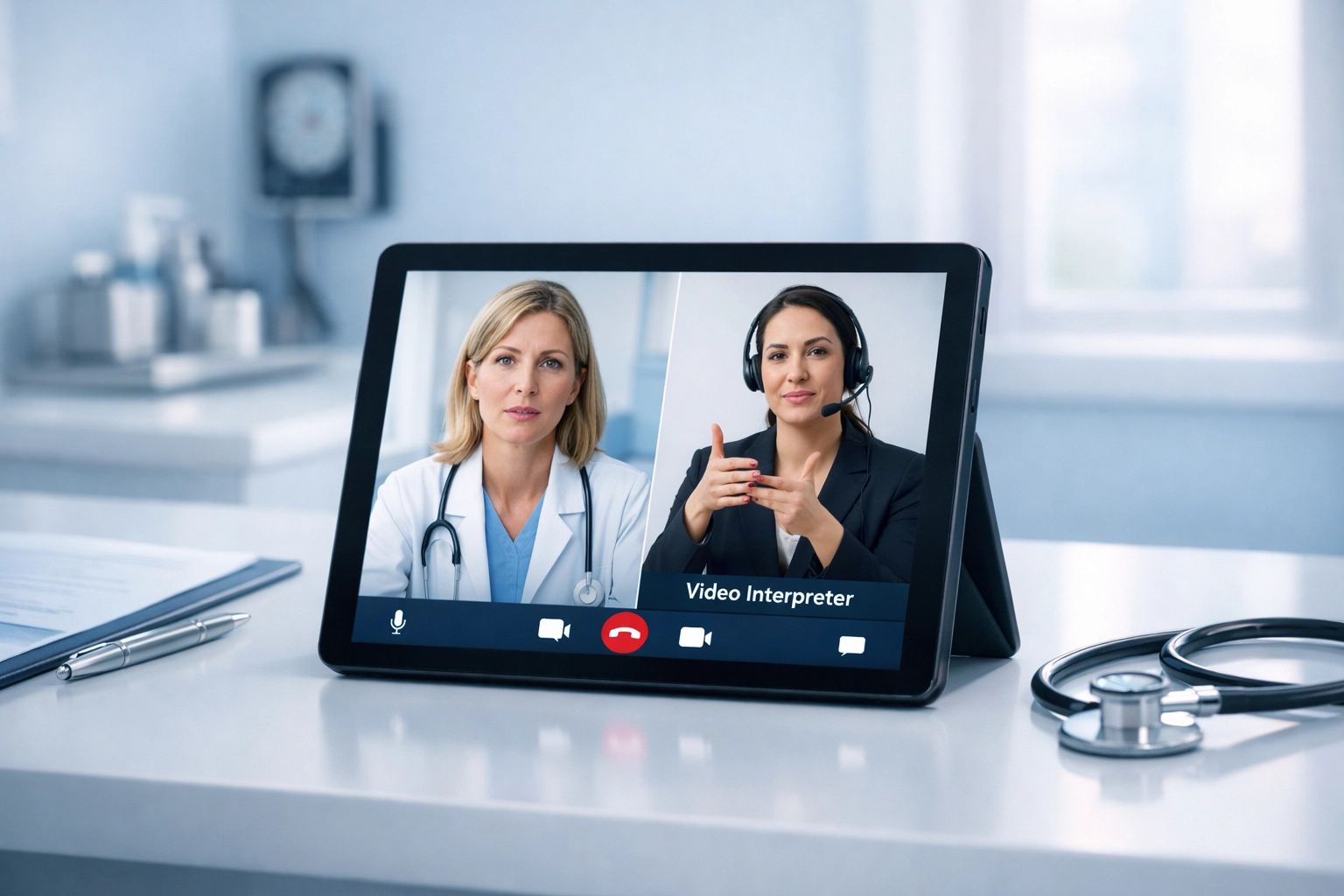
For medical interpreting California, VRI has proven particularly valuable in routine appointments, telehealth consultations, and situations where you need immediate language support but don't require the full context of a physical examination. Healthcare providers can connect with certified medical in-terpreters instantly, ensuring that patient intake, prescription explanations, and follow-up instructions are accurately communicated without keeping patients waiting while an on-site interpreter travels across town during peak traffic.
The technology has also proved its worth in insurance and workers' compensation settings where claims adjusters need to conduct phone interviews with injured workers or witnesses. By upgrading from audio-only OPI to VRI interpreting California, claims professionals gain visual confirmation that they're speaking with the right person and can better assess the claimant's condition and credibility through body language and facial expressions.
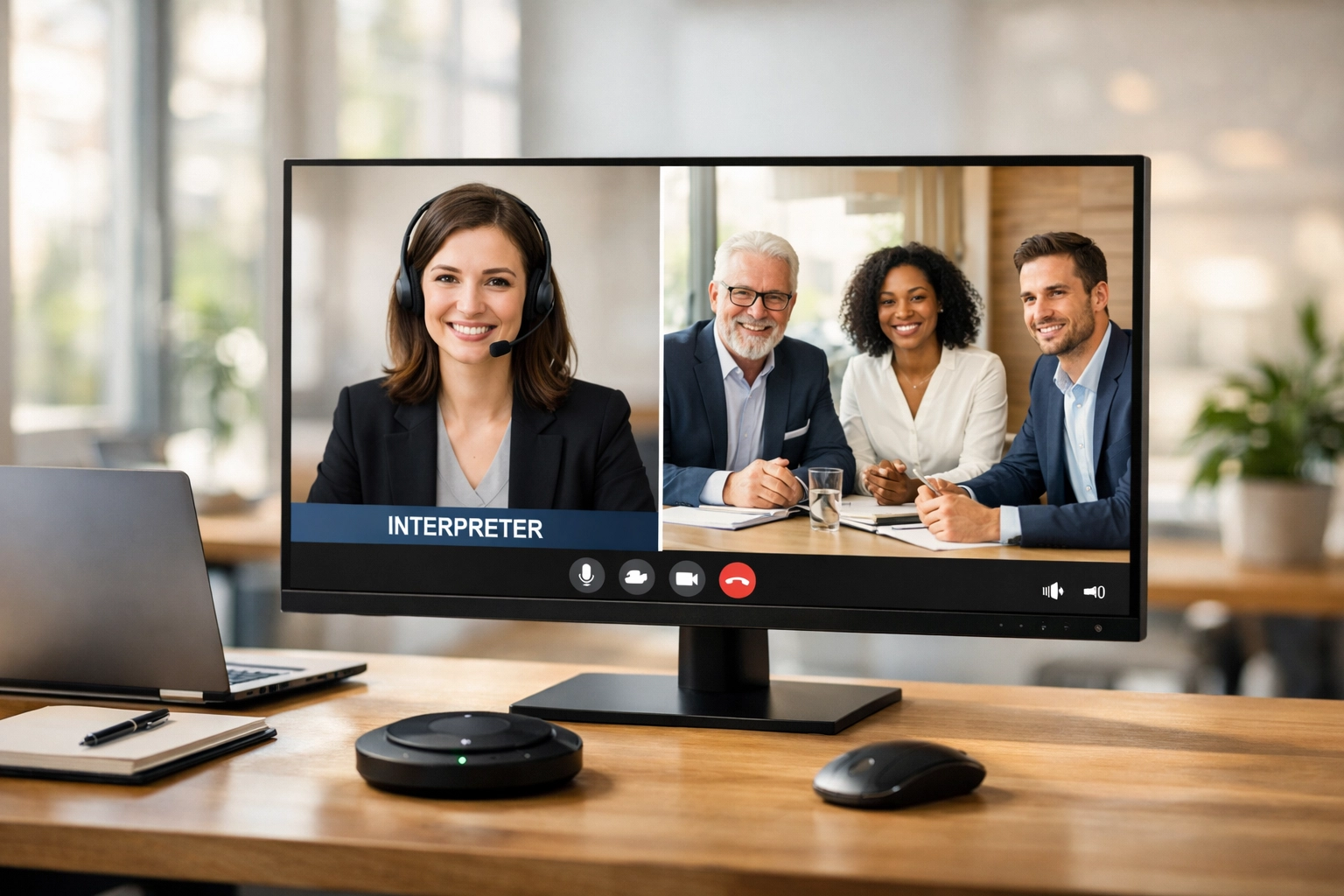
One often-overlooked advantage of remote interpreting services California is access to specialized language expertise that might not be available locally. If your San Jose business needs a certified interpreter for a rare language or dialect, VRI connects you with qualified professionals anywhere in the state or beyond, expanding your options dramatically compared to relying solely on local on-site interpreters.
When Phone Interpreting Makes Practical Sense
Over-the-phone interpreting shouldn't be dismissed as the "budget option" or a mere convenience shortcut. For specific applications, OPI delivers exactly what you need with minimal complexity. When you're handling routine business communications, initial intake calls, or straightforward informational exchanges that don't carry legal weight or medical consequences, phone interpreting provides immediate access at the moment you need it.
Agricultural interpreting California operations might use OPI effectively for quick HR questions, scheduling confirmations, or preliminary discussions before escalating to on-site or VRI for more substantive matters. Similarly, businesses conducting initial screening calls with prospective employees or vendors can rely on phone interpreting to bridge language gaps without overinvesting in interpret-ing resources before they know whether the relationship will progress.
The key limitation is obvious: without visual information, interpreters working via phone must rely entirely on auditory cues. This makes OPI unsuitable for any situation where documents need to be reviewed, identification needs verification, or non-verbal communication carries significant meaning. You also lose the accountability and presence that comes with seeing the interpreter, which can matter in formal or high-stakes contexts.
Industry-Specific Guidance for California Businesses
Legal firms and courts should default to on-site interpreting for depositions, trials, hearings, and any proceeding where interpretation will become part of the official record. Consider VRI for prelitigation consultations, remote hearings that are already conducted via video, and client meetings where travel time would create unreasonable delays. Reserve OPI for truly preliminary matters like initial phone screenings.

For workers' compensation interpreters and insurance professionals handling insurance claim interpreting California, on-site interpretation is essential for independent medical examinations, formal settlement conferences, and any interaction where the interpreter's certification and presence might be scrutinized later. VRI works well for routine claims adjusting calls, follow-up appointments, and file reviews where you need to discuss medical records with the injured worker. The workers' compensation space demands accuracy and documentation, so choose your modality with that scrutiny in mind.
Healthcare providers should assess each clinical situation individually. Physical examinations, procedures, informed consent discussions, and sensitive diagnoses warrant either on-site or high-quality VRI depending on urgency and availability. Routine follow-ups, prescription refills, and administrative matters can often be handled effectively through medical interpreting California via VRI. Save OPI for truly urgent situations where any interpreter access is better than delayed communication, but recognize its limitations in clinical contexts.
Agricultural operations benefit from on-site interpreters for safety training, equipment operation instruction, and workplace investigations where liability concerns are present. VRI can supplement these efforts for routine HR matters and administrative communications. The nature of agricultural interpreting California often involves field environments where reliable video connectivity might be challenging, so plan accordingly and have backup options ready.
Making Your Decision With Confidence
The modality question isn't about choosing the "best" option in absolute terms, it's about matching the right tool to your specific communication challenge. Start by asking yourself what's truly at stake in the interaction. Are legal rights on the line? Could miscommunication result in physical harm? Will this interpretation potentially be scrutinized in litigation or regulatory proceedings? If the answer to any of these questions is yes, lean toward on-site interpretation or high-quality VRI at minimum.
Consider your timeline and geographic realities as well. If you need interpretation immediately and can't wait for travel time, VRI or OPI might be your only practical options. If your California business operates in multiple locations and needs consistent interpreting services across the state, developing a relationship with a provider who can deliver all three modalities gives you flexibility as needs evolve.
Pricing for professional translation services can vary widely depending on complexity and turnaround time, and the same principle applies to interpreting services. The lowest-cost option rarely delivers the best outcomes in scenarios where accuracy and credibility matter. Investing appropriately in the right interpreting modality protects you from the far greater costs of miscommunication: whether those costs manifest as legal liability, workers' compensation claim disputes, patient safety incidents, or workplace accidents.
Moving Forward With Professional Support
The California business landscape demands language access solutions that match the sophistication and stakes of your operations. Whether you're navigating the legal complexities of litigation, managing the sensitive dynamics of workers' compensation claims, ensuring patient safety in healthcare settings, or maintaining workplace safety in agricultural environments, your choice of interpreting modality sends a message about your commitment to accurate communication.
Organizations that take language access seriously don't treat it as an afterthought or a commodity service to be procured at the lowest possible price. They recognize that qualified interpreters whether appearing on-site, via video, or over the phone: serve as essential partners in achieving their business objectives. By choosing the appropriate modality for each situation and working with experienced providers who understand California's diverse industries and communities, you position your organization to communicate effectively across language barriers while managing risk and demonstrating respect for all parties involved.
Ready to determine which interpreting modality best serves your California business needs? Request a quote to discuss your specific requirements with language access professionals who understand your industry and can recommend the right solution for your situation. Whether you need on-site interpreters for high-stakes legal proceedings, VRI for efficient healthcare communications, or a comprehensive approach that leverages all three modalities strategically, the right partner makes all the difference in achieving communication that's accurate, culturally appropriate, and tailored to your operational realities.