The Real Cost of Poor Translation in California Businesses (and How to Avoid It)
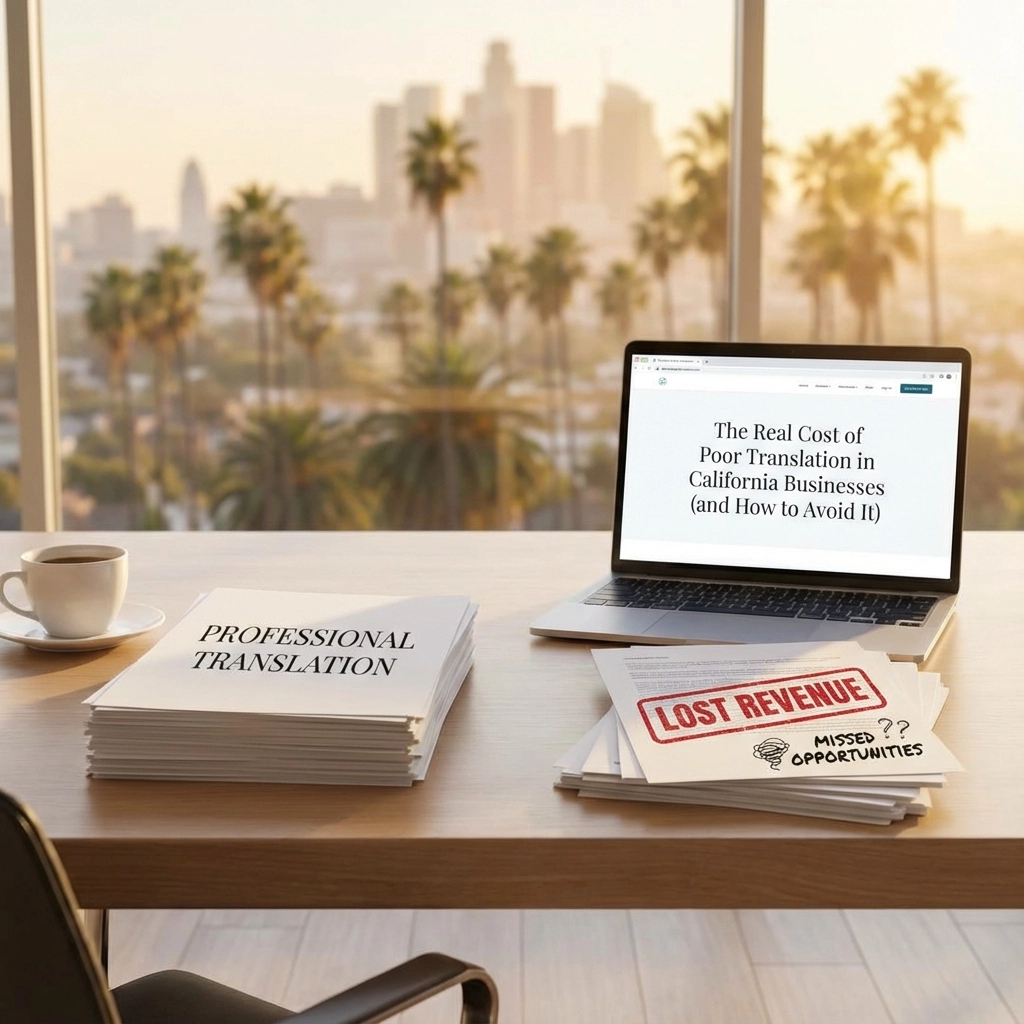
When a mistranslated baby formula instruction led to a $10 million recall, or when a single medical interpretation error resulted in a $71 million malpractice settlement, these weren't just unfortunate accidents: they were preventable disasters that highlight the astronomical cost of poor translation services.
In California's diverse business landscape, where over 200 languages are spoken and international commerce drives the economy, translation errors aren't just embarrassing mistakes. They're business threatening liabilities that can destroy years of hard work in a single misinterpreted document.
The Staggering Financial Impact of Translation Failures
Recent studies reveal that 73% of San Jose companies struggle with translation quality issues that cost them time, money, and credibility. These aren't small hiccups: they're million-dollar mistakes that could have been easily prevented with proper professional translation services.
Consider these real-world disasters:
Mead Johnson's $10 Million Formula Recall: Incorrect Spanish preparation instructions on baby formula packaging forced the company to recall 4.6 million cans, costing at least $10 million in direct expenses, not counting the immeasurable damage to brand trust and market share.
HSBC's "Do Nothing" Disaster: The bank's "Assume Nothing" campaign became "Do Nothing"when poorly translated into multiple languages, requiring a complete $10 million global rebranding effort to repair their reputation.
The $71 Million Medical Mistranslation: When hospital staff incorrectly translated "intoxicado" (meaning "poisoned" or "sick from ingesting something") as "intoxicated," doctors treated a teenager's cerebral hemorrhage as a drug overdose case. The resulting malpractice settlement of $71 million could have been prevented with qualified healthcare interpreting services.

Hidden Costs That Multiply Over Time
Beyond headline-grabbing disasters, poor translation creates cascading costs that many California businesses don't recognize until it's too late. These hidden expenses often exceed the original translation investment by thousands of percent.
Legal and Compliance Violations
Companies in regulated industries face compounding penalties when translation errors violate safety standards. OSHA citations for inadequately translated safety materials can cost tens of thousands of dollars, while workplace injuries from mistranslated safety information generate workers' compensation claims and lawsuits reaching hundreds of thousands of dollars.
Manufacturing, healthcare, and legal firms must comply with ISO 17100:2015 and ISO 9001:2015standards, which require certified translators. Using untrained bilingual employees violates these requirements, resulting in audit failures, regulatory sanctions, and costly re-audits.
Productivity Losses from Internal "Solutions"
Many California businesses attempt to save money by assigning translation tasks to bilingual employees. This strategy backfires spectacularly. According to the U.S. Labor Department, employees experience 50-60 interruptions daily, and after each interruption, it takes 23 minutes to return to their original task: costing $10,375 per person per year in lost productivity.
When you add translation responsibilities to already-busy staff members, you're not just compromising translation quality: you're sabotaging their primary job performance.
Industry-Specific Vulnerabilities in California
Different sectors face unique translation challenges that can prove catastrophic when handled improperly.
Technology and Manufacturing
Silicon Valley companies expanding globally often underestimate the complexity of technical translation. A single mistranslated software interface or user manual can trigger product recalls, customer service nightmares, and liability claims. Hardware manufacturers face even higher stakes: incorrect assembly instructions or safety warnings can result in product failures and serious injuries.
Healthcare and Life Sciences
California's massive healthcare industry operates under strict regulatory oversight where translation errors can literally be life-and-death situations. Beyond the obvious medical interpretation needs, pharmaceutical companies, medical device manufacturers, and research institutions require precise translation of clinical trial data, regulatory submissions, and patient materials.

Legal and Financial Services
Legal document translation demands absolute precision. A misplaced modifier or incorrectly translated clause can nullify contracts, trigger lawsuits, or create regulatory violations. Financial services face similar challenges with disclosure documents, compliance materials, and client communications inCalifornia's multilingual markets.
The False Economy of Cheap Translation
Many businesses gravitate toward services advertising $0.05 per word, not realizing these "bargain" providers often skip essential quality assurance stages that prevent costly errors.
This penny-wise, pound-foolish approach creates several problems:
No Subject-Matter Expertise: Cheap services assign any available translator to your project, regardless of industry knowledge. A translator specializing in marketing copy shouldn't handle medical device manuals: the terminology and regulatory requirements are completely different.
Rushed Timelines: Low-cost providers compensate for thin margins by rushing jobs through their system, eliminating review stages that catch critical errors before they reach your customers.
No Quality Assurance: Professional translation involves multiple review stages: initial translation, editing, proofreading, and final quality checks. Budget services typically skip these steps, delivering first-draft work that contains the exact errors you're trying to avoid.
How to Choose Translation Services That Protect Your Business
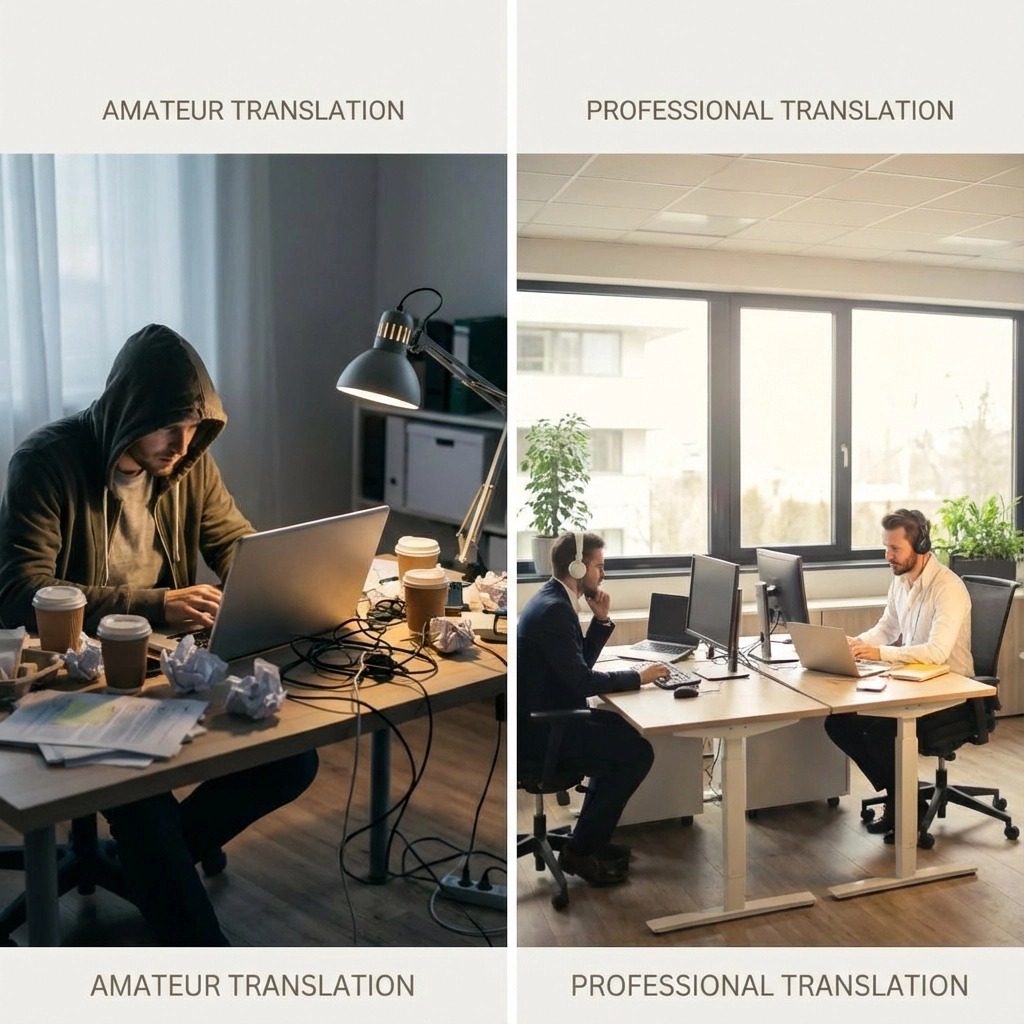
Selecting the right language service provider requires evaluating factors beyond price. Here's what separates professional agencies from budget alternatives:
Certified Expertise
Look for providers whose translators hold relevant certifications and demonstrate subject-matter expertise in your industry. Professional agencies like Ortiz Schneider employ native speakers with specialized training in legal, medical, technical, and business translation.
Proven Quality Systems
Ask potential providers about their quality assurance processes. Professional agencies implement multi-stage review procedures, use translation memory systems for consistency, and maintain detailed project management protocols.
Industry Specialization
Generic translation services can't match the expertise of providers who specialize in specific sectors.Whether you need business translation or community organization materials, choose providers with demonstrated experience in your field.
Technology and Security
Professional providers use advanced translation management systems, maintain strict confidentiality protocols, and offer secure file transfer systems. These aren't luxury features: they're essential safeguards for protecting your proprietary information.
Prevention Strategies That Actually Work
Avoiding translation disasters requires more than just choosing the right provider: you need systematic approaches that build quality into every project.
Plan Adequate Timelines
Rushed translations skip essential review stages and increase error rates. Expedited jobs often cost50–100% more than standard timelines while compromising accuracy. Plan translation needs into your project schedules rather than treating them as last-minute afterthoughts.
Establish Clear Communication
Provide context, target audience information, and specific requirements to your translation team. The more they understand your goals, the better they can adapt content for your specific market needs.
Implement Review Processes
Even with professional translation services, establish internal review procedures involving subject matter experts who can verify technical accuracy and cultural appropriateness.
Build Long-Term Partnerships
Working consistently with the same translation provider builds institutional knowledge about your business, terminology preferences, and quality standards. This relationship approach reduces errors and improves efficiency over time.
The ROI of Professional Translation
While professional translation services require higher upfront investment than budget alternatives, the ROI becomes clear when you calculate the cost of even a single major error. A $5,000 professional translation project that prevents a $500,000 legal settlement or product recall represents a 10,000%return on investment.
Professional translation services also generate positive returns through improved market penetration, customer satisfaction, and regulatory compliance. When your materials communicate clearly and accurately in multiple languages, you're not just avoiding problems: you're creating competitive advantages.

Taking Action to Protect Your Business
The examples in this article aren't cautionary tales from distant industries: they're warnings about risks that every California business faces when handling translation inadequately. The good news is that these disasters are completely preventable with proper planning and professional services.
Whether you need one-time document translation or ongoing language support, the key is partnering with experienced providers who understand both the technical requirements and business implications of accurate translation.
Don't let poor translation become your next costly mistake. Professional language services are an investment in your company's reputation, legal compliance, and long-term success in California's diverse markets.
Ready to protect your business from translation disasters? Contact Ortiz Schneider today for a free consultation and discover how professional translation services can safeguard your company's future while opening new opportunities in global markets. Request your quote now and take the first step toward translation solutions that actually work.