Translation Services in San Jose: 7 Mistakes You're Making (and How to Fix Them)
Silicon Valley's business hub thrives on global connections, yet 73% of San Jose companies strugglewith translation quality issues that cost them time, money, and credibility. From tech startups in NorthSan Jose to manufacturing firms near the San Jose International Airport, businesses across the SouthBay are making costly translation mistakes that could easily be avoided.
Whether you're preparing patent documents, translating employee handbooks, or localizing marketing materials for diverse communities in East San Jose, the wrong translation approach can derailyour business goals. After serving California businesses for over 25 years, we've seen these same seven mistakes repeatedly: and more importantly, we know exactly how to fix them.
Mistake #1: Choosing Price Over Precision
The Problem: You find a translation service advertising "professional translations for $0.05 per word"and think you've struck gold. Six weeks later, your legal documents are rejected by the court, or yourmarketing campaign falls flat because the translation missed cultural nuances that resonate with SanJose's diverse Hispanic and Asian communities.
Why This Backfires: Quality translation requires experienced linguists, subject-matter expertise, andmultiple review stages. Rock-bottom pricing usually means corner-cutting on these essentials.
The Fix: Focus on value, not just cost. Professional translation services typically range from $0.12-$0.25 per word depending on complexity and turnaround time. Ask potential providers about their quality assurance process, translator credentials, and revision procedures. A slightly higher up- front investment saves you from costly do-overs and protects your reputation.
Mistake #2: Ignoring Translator Credentials and Specialization
The Problem: You assume any Spanish speaker can translate your workers' compensation documents, or that a general translator can handle your biotech patents. Then you discover that legal terminology was mistranslated, or technical concepts were simplified beyond recognition.
Why This Backfires: Translation isn't just about language: it requires deep knowledge of specific industries, legal systems, and technical fields. A translator without legal expertise might misinterpretcritical contractual terms.

The Fix: Always verify that your translator has relevant credentials and specialization. Look for certifications from the American Translators Association (ATA) or court certifications for legal work. At OrtizSchneider, our translators undergo rigorous vetting and maintain expertise in specific sectors like healthcare, workers' compensation, and business documentation. Ask to see sample work or casestudies in your industry before committing.
Mistake #3: Underestimating Turnaround Time Requirements
The Problem: Your product launch is scheduled for next week, your investor meeting is tomorrow, oryou have a court deadline approaching. You contact a translation service expecting overnight delivery, only to learn that quality work takes time: and rush jobs often compromise accuracy.
Why This Backfires: Rushed translations skip essential review stages, increase error rates, and oftencost 50-100% more than standard turnaround times. What seems like a time-saver becomes a costlymistake when documents need to be retranslated.
The Fix: Plan ahead whenever possible. Standard translation projects typically require 2-5 businessdays depending on length and complexity. For urgent needs, work with established providers who offer expedited services with proven quality controls. Build translation time into your project timelines,especially for critical documents like regulatory submissions or legal filings that serve communitiesfrom Milpitas to Morgan Hill.
Mistake #4: Failing to Specify Your Target Audience
The Problem: You request a Spanish translation without specifying whether you're targeting Mexicanimmigrants in East San Jose, Central American families in the Roosevelt area, or South American professionals in Willow Glen. The resulting translation feels generic and fails to connect with any of thesecommunities.
Why This Backfires: Spanish varies significantly by region, and what sounds natural to one community might seem awkward or even confusing to another. The same principle applies to Chinese, Vietnamese, and other languages spoken throughout San Jose's diverse neighborhoods.

The Fix: Always specify your target audience's geographic origin, education level, and cultural context. Share information about where your audience lives, works, or seeks services. Professional translation providers will match you with linguists familiar with your specific demographic. This attentionto detail makes the difference between generic translation and authentic communication that buildstrust with your intended audience.
Mistake #5: Not Providing Context and Reference Materials
The Problem: You send a translator a standalone document without explaining what it's for, who willread it, or how it fits into your broader communication strategy. The translator delivers technically accurate work that completely misses your intended tone or purpose.
Why This Backfires: Context shapes every translation decision. A press release requires different language than an internal memo. Marketing copy needs creativity while legal documents demand precision. Without context, even skilled translators can't make optimal choices.
The Fix: Always provide background information, including:
⦁ Document purpose and intended use
⦁ Target reader demographics and expectations
⦁ Preferred tone (formal, conversational, technical)
⦁ Related materials or brand guidelines
⦁ Timeline and distribution plans
Our experienced team regularly works with clients to understand project context, ensuring transla- tions align with your specific goals and audience expectations.
Mistake #6: Overlooking Industry-Specific Requirements
The Problem: You treat all translation projects the same, not realizing that medical documents re- quire HIPAA compliance, legal translations need certification, and technical manuals must follow spe- cific formatting standards. Your project gets delayed when you discover additional requirements mid- process.
Why This Backfires: Different industries have unique standards, regulations, and expectations. What works for a restaurant menu won't work for a pharmaceutical label or court filing. Misunderstanding these requirements leads to rejected submissions, compliance issues, and project delays.

The Fix: Choose translation providers with proven experience in your specific industry. Ask about compliance procedures, certification capabilities, and specialized formatting requirements. Ortiz Schneider maintains expertise across multiple sectors, from community services serving Santa Clara County to complex business transactions throughout Silicon Valley. We understand industry-specific requirements and build compliance into our process from day one.
Mistake #7: Neglecting Confidentiality and Security Measures
The Problem: You share sensitive business documents, personal information, or proprietary data with a translation service without verifying their security protocols. Later, you worry about data breaches, unauthorized sharing, or inadequate protection of confidential materials.
Why This Backfires: Translation work often involves highly sensitive information: financial records, legal strategies, medical data, or trade secrets. Inadequate security measures put your business and clients at risk, potentially violating privacy laws or confidentiality agreements.
The Fix: Always verify security protocols before sharing sensitive documents. Look for providers who:
⦁ Use secure file transfer systems
⦁ Maintain confidentiality agreements with all translators
⦁ Follow industry-standard security practices
⦁ Carry professional liability insurance
⦁ Have established procedures for handling confidential materials
With over 25 years serving California businesses, we've built robust security protocols that protect client information while delivering exceptional results.
Getting Translation Services Right in San Jose
These seven mistakes might seem obvious in hindsight, but they're surprisingly common among busi- nesses throughout the South Bay. The key is working with experienced professionals who understand both language nuances and business requirements.
Quality translation services support your growth by enabling clear communication across language barriers, whether you're expanding into new markets, serving diverse communities, or meeting regu- latory requirements. The right approach saves time, prevents costly errors, and builds trust with your target audiences.
Ready to Get Your Translation Project Right?
Don't let translation mistakes slow down your San Jose business. Our team of certified translators and industry specialists has helped thousands of California companies achieve their communication goals with precision and cultural authenticity.
Request a quote today to discuss your specific translation needs with our experienced team. We'll help you avoid these common pitfalls while delivering accurate, culturally appropriate translations that serve your business objectives.
Have questions about your upcoming project? Contact us to speak with one of our translation spe- cialists and learn how we can support your success in San Jose's dynamic business environment.
Now create content for blog 2: "Remote Interpreting vs. On-Site: Which Is Better For Your California Business?"
Remote Interpreting vs. On-Site: Which Is Better For Your California Business?
California businesses are facing a critical decision that affects everything from healthcare delivery in rural Fresno to workers' compensation hearings in downtown San Francisco: should you choose re- mote interpreting or traditional on-site services? With California's multilingual population growing by 12% annually and new technologies reshaping how we communicate, this choice has become more complex: and more important: than ever.
The stakes are high. Choose wrong, and you might face compliance issues, communication break- downs, or unnecessary costs that drain your budget. Choose right, and you unlock efficient, cost-ef- fective communication that serves your diverse clients and employees across the Golden State.
After 25 years of providing both remote interpreting and on-site interpreting services throughout California, we've seen how the right choice can transform business operations. Here's everything you need to know to make the best decision for your specific situation.
Understanding Remote Interpreting: The New Standard
Remote interpreting connects you with professional interpreters via phone or video technology, elim- inating geographical barriers and reducing logistical complexity. This approach has exploded in pop- ularity, especially since 2020, when California businesses discovered they could access specialized in- terpreters instantly rather than waiting days for on-site scheduling.
Video Remote Interpreting (VRI) uses high-definition video connections to provide visual commu- nication, essential for sign language or situations where non-verbal cues matter. Over-the-Phone In- terpreting (OPI) delivers immediate audio interpretation for urgent situations or straightforward conversations.
The technology behind remote interpreting has matured significantly. Today's platforms offer encryp- tion, recording capabilities, and integration with existing business systems. For California companies serving diverse populations from Los Angeles to Sacramento, this means accessing certified inter- preters in over 200 languages without the scheduling challenges of traditional on-site services.

The Remote Interpreting Advantage: Speed, Cost, and Flexibili- ty
Immediate Access: When a Spanish-speaking worker gets injured at a construction site in San Diego, or a Mandarin-speaking patient arrives at an urgent care clinic in San Jose, remote interpreting con- nects you with qualified interpreters within minutes. No travel time, no scheduling delays, just imme- diate professional support.
Cost Efficiency: Remote services eliminate travel expenses, reduce minimum time commitments, and often cost 40-60% less than on-site alternatives. For healthcare facilities managing tight budgets, or businesses handling occasional interpreting needs, this represents significant savings.
Specialized Expertise: Need a certified medical interpreter who understands oncology terminology? Or a legal interpreter familiar with intellectual property law? Remote access means you're not limited to local talent: you can access the most qualified interpreter for your specific situation, regardless of their physical location.
24/7 Availability: Remote interpreting services operate around the clock, crucial for emergency situ- ations, after-hours medical care, or businesses serving clients in multiple time zones across Califor- nia's diverse economy.
When Remote Interpreting Falls Short
Despite its advantages, remote interpreting isn't universal solution. Complex legal proceedings of- ten benefit from in-person interpretation, where subtle gestures and room dynamics affect communi- cation. High-stakes negotiations where trust-building matters might also favor face-to-face interac- tion.
Technology dependencies create vulnerabilities. Internet outages, audio quality issues, or unfamil- iarity with video platforms can disrupt communication when you need it most. Cultural considera- tions also matter: some communities prefer in-person interactions, particularly for sensitive or deeply personal conversations.

The Enduring Value of On-Site Interpreting
On-site interpreting brings professional linguists directly to your location, providing full immersion in the communication environment. This traditional approach offers unique advantages that technology can't replicate.
Complete Environmental Awareness: On-site interpreters observe body language, environmental context, and group dynamics that video connections might miss. In workers' compensation evalua- tions or complex medical consultations, these details significantly impact communication accuracy.
Enhanced Trust and Rapport: Physical presence builds stronger connections between interpreters and participants. For sensitive discussions about family situations, legal troubles, or medical condi- tions, in-person interaction often facilitates more open communication.
Technical Reliability: On-site interpreting doesn't depend on internet connectivity, video quality, or technological familiarity. When reliability is paramount: such as during depositions, arbitrations, or critical medical procedures: physical presence eliminates technical risk.
Cultural Appropriateness: Some cultures prioritize face-to-face interaction, viewing remote commu- nication as impersonal or disrespectful. For community services working with traditional populations, on-site interpreting demonstrates respect and cultural sensitivity.
On-Site Limitations: Cost and Scheduling Challenges
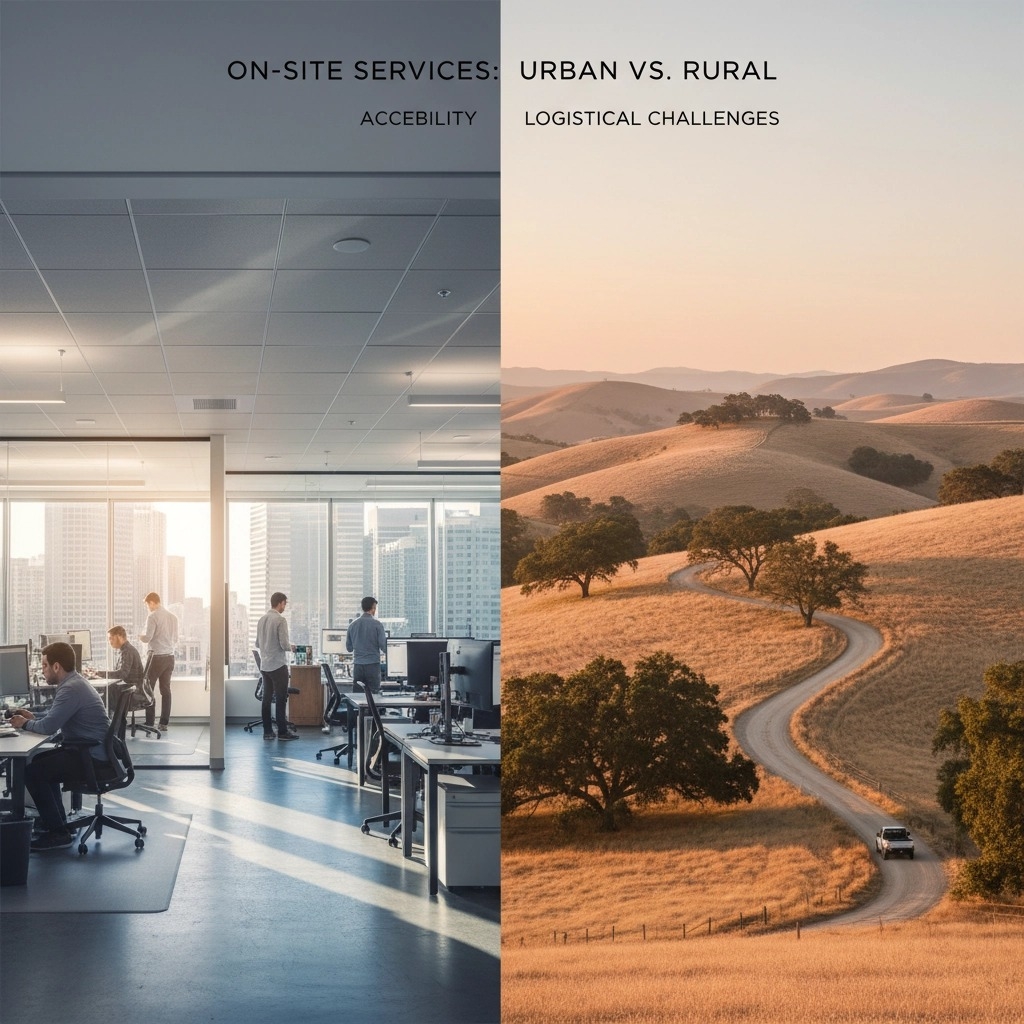
On-site services require advance scheduling, travel coordination, and higher minimum fees. For Los Angeles law firms or San Francisco medical practices, these factors can create delays and increase costs, particularly for short interactions or emergency situations.
Geographic constraints also limit options. Rural areas of California might have limited local inter- preter availability, forcing businesses to pay travel premiums or settle for less specialized expertise.
Industry-Specific Considerations for California Businesses
Healthcare: Remote interpreting excels for routine consultations, emergency situations, and follow- up appointments. However, surgical consultations, mental health evaluations, and complex diagnostic discussions often benefit from on-site presence. Many California healthcare systems use hybrid ap- proaches, leveraging remote services for efficiency while reserving on-site interpreters for complex cases.
Legal Services: Legal interpreting requirements vary significantly. Court proceedings typically require certified on-site interpreters, while client consultations, document reviews, and some depositions work well with high-quality video interpreting. Understanding jurisdictional requirements is crucial for California legal practices.
Workers' Compensation: Initial injury assessments and routine check-ins often work effectively with remote interpreting, while independent medical evaluations and dispute resolution hearings typically require on-site presence for optimal accuracy and participant comfort.
Business and Corporate: Remote interpreting handles most business communications effectively, from conference calls to training sessions. However, high-stakes negotiations, board meetings, and relationship-building activities might benefit from on-site interpretation.
Making the Right Choice: A Decision Framework
Consider these key factors when choosing between remote and on-site interpreting:
Urgency: Need immediate assistance? Remote interpreting provides instant access. Can you plan ahead? On-site services offer maximum reliability and presence.
Complexity: Simple conversations work well remotely. Complex, nuanced discussions benefit from in-person interpretation.
Frequency: Regular, ongoing needs might justify on-site services. Occasional requirements favor re- mote efficiency.
Budget: Limited resources point toward remote solutions. Premium budgets enable on-site options when beneficial.
Cultural Context: Consider your audience's preferences and cultural expectations regarding personal interaction.
Technical Environment: Reliable internet and video capabilities support remote interpreting. Chal- lenging technical environments favor on-site services.
The Hybrid Approach: Best of Both Worlds
Many successful California businesses don't choose between remote and on-site interpreting: they use both strategically. A hybrid approach leverages remote services for routine needs while reserving on-site interpreters for complex, sensitive, or high-stakes situations.
This flexibility optimizes both cost and quality, ensuring appropriate service levels for different com- munication needs. Our comprehensive services support this approach, helping clients determine the best solution for each specific situation.
Technology Trends Shaping the Future
Artificial intelligence, improved video quality, and enhanced mobile platforms continue expanding re- mote interpreting capabilities. However, these advances complement rather than replace human ex- pertise and cultural understanding that professional interpreters provide.
California businesses should stay informed about technological developments while focusing on fun- damental communication needs and client relationships that drive success.
Choosing Your Interpreting Partner
Whether you select remote, on-site, or hybrid interpreting, working with experienced professionals makes all the difference. Look for providers with proven California experience, industry specialization, and flexible service models that adapt to your evolving needs.
Quality interpreting supports your business growth by enabling clear communication across language barriers, ensuring compliance with California regulations, and building trust with diverse communities throughout the state.
Ready to Optimize Your Interpreting Strategy?
Don't let communication barriers limit your California business potential. Our experienced team helps companies throughout the state choose the right interpreting approach for their specific needs, bud- get, and goals.
Request a consultation to discuss your interpreting requirements with our specialists. We'll analyze your specific situation and recommend the optimal combination of remote and on-site services to support your success.
Have questions about remote or on-site interpreting options? Contact our team to explore how we can enhance communication throughout your California operations with reliable, professional inter- preting services tailored to your industry and community needs.